
Virtual Parenting Time in Family Law: Benefits, Risks, & Legal Considerations in Divorce & Separation Cases

The rapid expansion of digital communication has reshaped nearly every dimension of contemporary family life — including how separated and divorced parents sustain relationships with their children. One significant result is the growing prevalence of virtual visitation, also referred to as virtual parenting time: scheduled video calls, messaging, and other forms of electronic communication used to supplement, and in some cases partially replace, in-person contact. While the concept is not new, its relevance has intensified with the near-universal availability of smartphones, tablets, and high-speed internet.
Yet the growth of virtual visitation has outpaced the legal and clinical frameworks designed to govern it. Courts, practitioners, and families are now navigating a set of questions for which clear answers remain elusive: Can digital contact adequately support a child’s emotional and developmental needs, or does it inevitably fall short of what physical presence provides? Should virtual parenting time be treated as equivalent to in-person time for purposes of custody calculation? And in high-conflict families or cases with a history of coercive control or abuse, what safeguards are necessary to ensure that virtual contact serves the child and does not enable continued harm?

Virtual Visitation Laws: Legal Framework and Unresolved Questions
As the need to support meaningful parent-child contact across distance continues to grow, so does the importance of understanding how virtual visitation has evolved within family law — its legal foundations, demonstrated benefits, inherent limitations, and the conditions under which it is most effectively implemented.
Virtual visitation gained legal recognition in the early 2000s as courts confronted custody disputes shaped by increasing geographic mobility and the rapid expansion of digital technology. Wisconsin enacted one of the earliest governing statutes in 2006, explicitly authorizing electronic communication as a component of parenting time (Bach-Van Horn, 2008); Utah, Texas, and Illinois passed comparable legislation in subsequent years (Saini et al., 2013; Shefts, 2002). Despite variation in statutory language across states, a consistent principle emerges: virtual visitation should enhance face-to-face contact, not displace it.
Courts have exercised broad discretion in applying virtual visitation to maintain continuity in the parent-child relationship following relocation, work-related travel, or other disruptions to established parenting schedules (Bach-Van Horn, 2008; Saini et al., 2013; Shefts, 2002). Debate persists, however, over whether virtual contact can meaningfully compensate for reduced physical parenting time (Baude et al., 2022; Waller et al., 2024). The prevailing judicial view holds that it cannot substitute for physical presence (Bach-Van Horn, 2008), though some courts have permitted it to address parenting time inequities while consistently emphasizing its supplementary character (Singer & Brodzinsky, 2020).
Several legal questions remain inadequately resolved. Courts and practitioners continue to grapple with technological equity — how to ensure both homes have access to the necessary devices, connectivity, and digital competency to participate on equal footing. Enforcement questions are equally unsettled: the circumstances under which a parent may be held in contempt for disrupting virtual sessions are not consistently defined. Privacy concerns present a parallel challenge, as courts have yet to establish clear standards governing recording, surveillance, or unauthorized monitoring during virtual contact (Bach-Van Horn, 2008; Saini et al., 2013; Shefts, 2002).

How Virtual Visitation Supports Parent-Child Relationships
Virtual visitation is particularly valuable for divorced and separated families navigating distance due to relocation, military deployment, career demands, incarceration, or irregular work schedules — circumstances where physical parenting time is constrained but there is a desire to preserve the relationship (Saini et al., 2013).
When implemented thoughtfully, virtual visitation offers genuine developmental and relational benefits. Parents can sustain continuity in their child’s daily life by participating in bedtime routines, assisting with homework, or sharing meals via video call — forms of presence that reinforce attachment even across distance (Baude et al., 2022; Rejaän et al., 2024; Saini et al., 2013). Beyond routine contact, shared activities such as reading together, playing online games, or engaging in mutual interests create opportunities for interactive connection that go beyond passive check-ins (Rejaän et al., 2024; Saini et al., 2013; Waller et al., 2024). For noncustodial parents, consistent virtual contact also mitigates the isolation that often accompanies physical separation — keeping them current with their child’s evolving interests, friendships, and developmental milestones (Shefts, 2002; Singer & Brodzinsky, 2020).
Digital communication cannot replicate in-person contact, but it meaningfully enhances an established connection when it is structured, consistent, and calibrated to the child’s developmental needs (Shefts, 2002; Waller et al., 2024).

Age Considerations for Virtual Visitation
The efficacy of virtual visitation depends significantly on the child’s age, developmental stage, and individual profile. Younger children have limited capacity for sustained screen attention and require active caregiver support to remain engaged (Waller et al., 2024). Temperament and sensory style also matter — some children take naturally to visual and verbal interaction, while others become overstimulated or withdraw quickly, regardless of age (Baude et al., 2022). Effective virtual visitation accounts for these differences rather than applying a uniform model across children.
For infants and toddlers, brief and predictable sessions built around familiar faces, voices, and routines — songs, simple games, shared rituals — are most effective. Attention spans are short, and the goal is emotional recognition and comfort rather than sustained interaction (Troseth et al., 2018).
School-age children represent the developmental sweet spot for virtual visitation. They can sustain attention across longer sessions, engage in reciprocal conversation, and participate meaningfully in shared activities such as homework help, reading, online games, or discussions about school and friendships. Predictable structure remains important and tends to be well-received by this age group (Saini et al., 2013).
Adolescents present a different set of considerations. Teens value autonomy and are more likely to resist scheduled contact that competes with peer relationships or social commitments. Flexible formats — texting, asynchronous messaging, or informal check-ins — are often more effective than structured video calls. Privacy is particularly salient at this stage; adolescents are acutely sensitive to monitoring, and any perception of surveillance can erode trust and willingness to engage (Rejaän et al., 2024; Smyth et al., 2020).
Risk Factors for Virtual Visitation
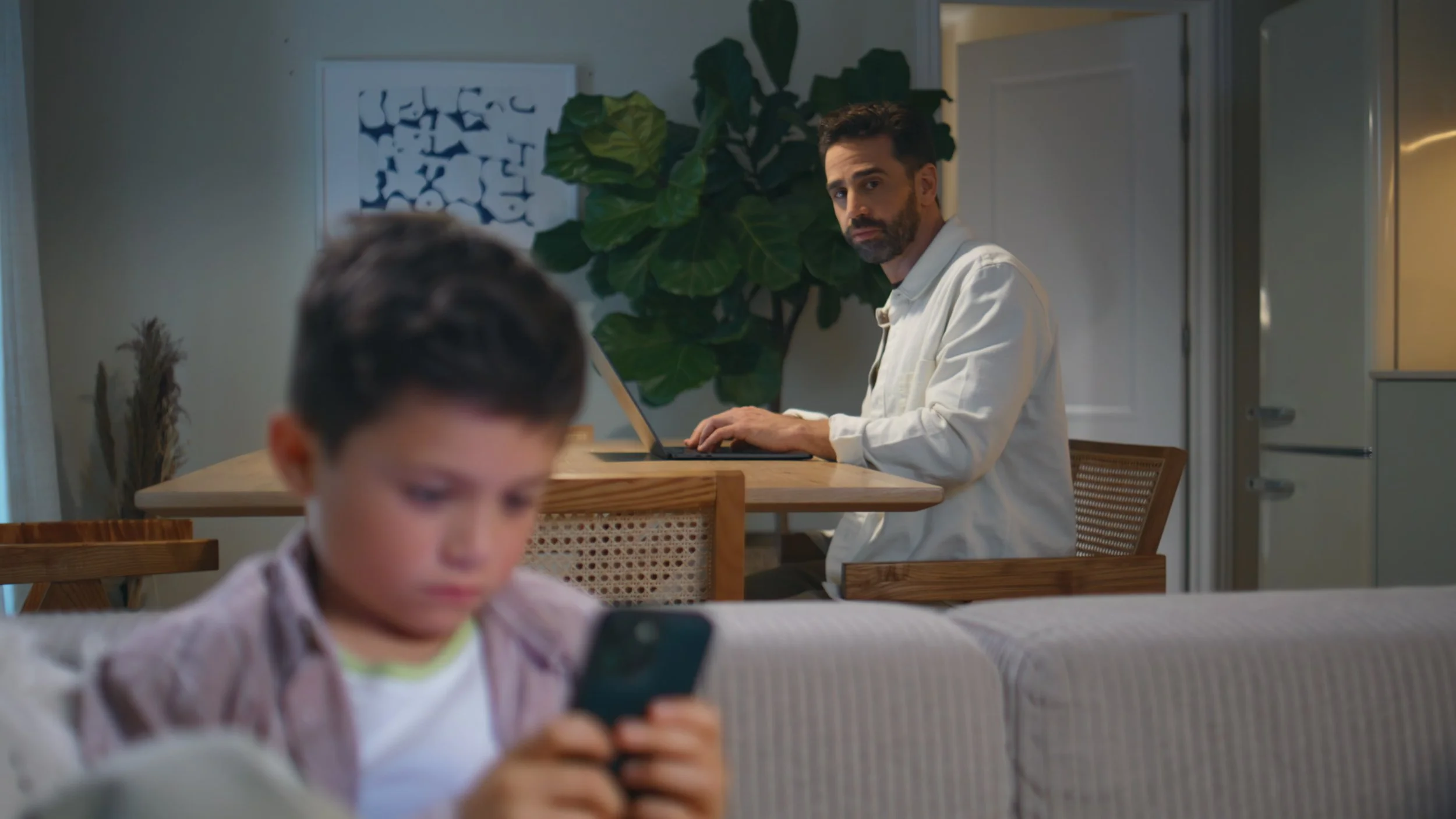
Across all age groups, visitation — whether virtual or in-person — becomes destabilizing when children are exposed to parental conflict during sessions, pressured to perform affection on demand, or scheduled into established routines such as mealtimes, homework, or bedtime without adequate transition time (Saini et al., 2013). These conditions heighten anxiety, activate loyalty conflicts, and undermine the sense of predictability children depend on — effects that are compounded when contact is inconsistent or emotionally charged (Baude et al., 2022; Saini et al., 2013; Shefts, 2002; Smyth et al., 2020). In high-conflict families, children frequently internalize responsibility for managing both parents’ emotional states, meaning even subtle tension during a call carries disproportionate psychological weight (Rejaän et al., 2024). Thoughtful scheduling, clear behavioral expectations, and genuine co-parenting cooperation are the structural conditions that allow virtual visitation to serve the child rather than the adults.
Virtual Visitation in High-Conflict Divorce & Abuse Cases
Virtual visitation presents distinct challenges in high-conflict families and in situations involving parental alienation or estrangement, intimate partner violence, coercive control, or child safety concerns. While digital communication can help preserve parent-child relationships, it can equally become a vehicle for manipulation, surveillance, or harm when the relational context is adversarial. Manipulation in this context may take the form of using calls to reinforce the child’s alignment with one parent, elicit disclosures about the other household, or exploit the emotional intensity of reunification contact to deepen dependency or distress (Baude et al., 2022; Saini et al., 2013; Shefts, 2002; Smyth et al., 2020; Wolman & Pomerance, 2012).
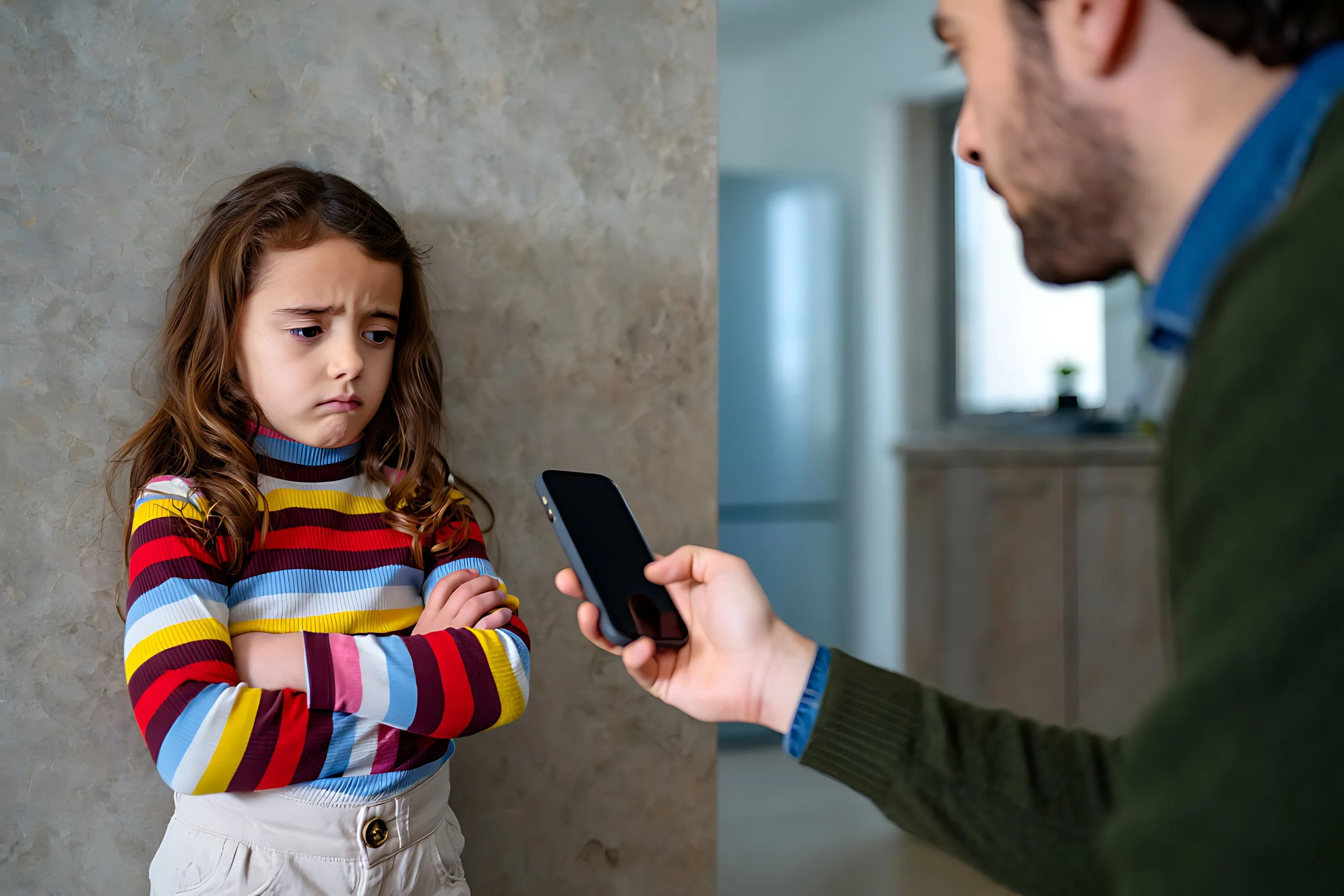
The risks associated with virtual visitation in high-conflict and safety-involved cases are wide-ranging and frequently difficult to detect. A parent may intrude on or monitor calls, using proximity or technology to surveil the other household (Russell et al., 2021). Sessions may be exploited to interrogate the child about the other parent’s home, relationships, or behavior (Wolman & Pomerance, 2012). Virtual contact can also become a platform for disparagement or loyalty-binding, with calls that leave children feeling caught between competing parental demands (Schrodt, 2025). Even absent overt conflict, children may experience calls as stressful — sensing that they are being observed, evaluated, or positioned (Stokkebekk et al., 2019). In each of these scenarios, the child’s experience of connection is compromised by the relational dynamics surrounding the contact itself.
Addressing these dynamics requires more than good intentions on the part of either parent. Courts and clinicians should resist formulaic approaches to virtual visitation in safety-involved cases and instead develop individualized protocols responsive to the specific risk profile present (AFCC, 2022; Ver Steegh & Dalton, 2008). Structural safeguards — including platform-specific privacy provisions, prohibitions on recording, restrictions on parental proximity during sessions, and access to third-party supervision where warranted — can meaningfully reduce the potential for misuse (Shefts, 2002; Russell et al., 2021; Wolman & Pomerance, 2012). Equally important is building in child-centered flexibility: provisions that allow sessions to be shortened or paused in response to observed distress, without assigning fault to the residential parent (Stokkebekk et al., 2019; Johnston et al., 2009). Where the goal is relationship repair, virtual contact functions most effectively as an adjunct to ongoing therapeutic support rather than a substitute for it (Fidler & Bala, 2010; Saini et al., 2013).

Best Practices for Virtual Visitation: Guidelines for Courts & Families
Effective visitation — whether in person or virtual — depends on structure, consistency, and a shared commitment to child-centered practice. Predictable schedules give children a reliable framework for connection, while calm, developmentally appropriate contact allows for genuine engagement rather than performance (Baude et al., 2023; Fong, 2020; Russell et al., 2021). When sessions are free of conflict and parental tension, children can be fully present — unburdened by anxiety or divided loyalties (Smyth et al., 2020). This means preparing children in advance, minimizing environmental distractions, and resisting the impulse to monitor or interrupt — except where legitimate safety concerns warrant it (Singer & Brodzinsky, 2020).
Practitioners — mediators, therapists, visitation supervisors, and family law attorneys — play a central role in helping families develop realistic expectations and sustainable routines (Oehme et al., 2021; Smyth et al., 2020). This includes assessing developmental appropriateness, offering strategies for maintaining connection across distance, and addressing practical obstacles such as scheduling conflicts, technology access, and communication breakdowns (Oehme et al., 2021; Wolman & Pomerance, 2012). In high-conflict cases, practitioners may recommend supervised virtual visits or encrypted platforms to protect children from exposure to manipulation or covert surveillance (Baude et al., 2023; Oehme et al., 2021; Smyth et al., 2020). The governing standard remains consistent: virtual visitation should enhance children’s stability, preserve meaningful relationships, and supplement — not displace — in-person parenting time (Shefts, 2002).
Virtual visitation has become a meaningful fixture in contemporary parenting plans, allowing separated or geographically distant parents to sustain connection with their children in ways previously unavailable. Its benefits are real: consistent contact across distance (Singer & Brodzinsky, 2020), preserved emotional bonds (Fong, 2020), and shared experiences that geographic separation would otherwise foreclose (Saini et al., 2013). Yet its limitations are equally real. Virtual contact cannot replicate the quality of physical presence and should never be used to justify reductions in face-to-face parenting time. For virtual visitation to fulfill its promise, courts, parents, and practitioners must approach it with clarity, cooperation, and a consistent orientation toward the child’s needs — as a valuable supplementary tool, most effective when implemented thoughtfully and in service of, not in place of, robust in-person parenting time.
References
Association of Family and Conciliation Courts. (2022). Guidelines for examining intimate partner violence: A supplement to the AFCC Model Standards of Practice for Child Custody Evaluation. AFCC.
Bach-Van Horn, E. (2008). Virtual visitation: Are webcams being used as an excuse to allow relocation. J. Am. Acad. Matrimonial Law., 21, 171.
Baude, A., Henaff, G., Potin, E., Bourassa, A., Saint-Jacques, M. C., & Noël, J. (2023). Information and communication technology use among children separated from one or both parents: A scoping review. Family Relations, 72(2), 601–620.
Fidler, B. J., & Bala, N. (2010). Children resisting postseparation contact with a parent: Concepts, controversies, and conundrums. Family Court Review, 48(1), 10–47. https://doi.org/10.1111/j.1744-1617.2009.01287.x
Fong, E. (2020). Examining the relationship between parent reported satisfaction with the parent-child relationship and use of virtual visitation (Order No. 27738958). ProQuest Dissertations & Theses Global.
Johnston, J. R., Roseby, V., & Kuehnle, K. (2009). In the name of the child: A developmental approach to understanding and helping children of conflicted and violent divorce (2nd ed.). Springer.
Oehme, K., O’Rourke, K. S., & Bradley, L. (2021). Online virtual supervised visitation during the COVID-19 pandemic: One state’s experience. Family Court Review, 59(1), 131–143.
Rejaän, Z., van Der Valk, I. E., & Branje, S. (2024). Adolescents’ belonging in post-divorce families: Examining residential and digital contact with mothers and fathers. Journal of Research on Adolescence, 34(2), 568–583.
Russell, L. T., Ferraro, A. J., Beckmeyer, J. J., Markham, M. S., Wilkins-Clark, R. E., & Zimmermann, M. L. (2021). Communication technology use in post-divorce coparenting relationships: A typology and associations with post-divorce adjustment. Journal of Social and Personal Relationships, 38(12), 3752–3776. https://doi.org/10.1177/02654075211043837
Saini, M., Mishna, F., Barnes, J., & Polak, S. (2013). Parenting online: An exploration of virtual parenting time in the context of separation and divorce. Journal of Child Custody, 10(2), 120–140. https://doi.org/10.1080/15379418.2013.796265
Schrodt, P. (2025). Interparental conflict and parent–child triangulation: A meta-analytical review of children feeling caught between parents. Human Communication Research, hqaf018.
Shefts, K. R. (2002). Virtual visitation: The next generation of options for parent-child communication. Family Law Quarterly, 36(2), 303–327. http://www.jstor.org/stable/25740385
Singer, J., & Brodzinsky, D. (2020). Virtual parent-child visitation in support of family reunification in the time of COVID-19. Developmental Child Welfare, 2(3), 153–171.
Smyth, B. M., Ainscough, G., & Payne, J. L. (2020). Modes of communication between high-conflict separated parents: Exploring the role of media multiplexity and modality switching. Journal of Family Communication, 20(3), 189–205. https://doi.org/10.1080/15267431.2020.1754826
Stokkebekk, J., Iversen, A. C., Hollekim, R., & Ness, O. (2019). “Keeping balance,” “Keeping distance” and “Keeping on with life”: Child positions in divorced families with prolonged conflicts. Children and Youth Services Review, 102, 108–119.
Troseth, G. L., Strouse, G. A., & Russo Johnson, C. E. (2018). Seeing past the screen: Toddlers' transfer of learning from contingent and non-contingent video. Journal of Experimental Child Psychology, 166, 291–303. https://doi.org/10.1016/j.jecp.2017.09.004
Ver Steegh, N., & Dalton, C. (2008). Report from the Wingspread Conference on domestic violence and family courts. Family Court Review, 46(3), 454–475. https://doi.org/10.1111/j.1744-1617.2008.00215.x
Waller, R., Paz, Y., Himes, M. M., White, L. K., Rodriguez, Y., Gorgone, A., Luby, J., Gerstein, E. D., Brady, R. G., Chaiyachati, B. H., Duncan, A. F., Barzilay, R., Kornfield, S. L., Burris, H. H., Seidlitz, J., Parish-Morris, J., Laney, N., Gur, R. E., & Njoroge, W. F. M. (2024). Observations of positive parenting from online parent–child interactions at age 1. Parenting: Science & Practice, 24(1), 39–65.
Wolman, R., & Pomerance, R. (2012). Telepresence technology in divorce and separation. Open Access Journal of Forensic Psychology, 4, 51–68.
