School Avoidance & Refusal: Causes, Signs, & How to Help
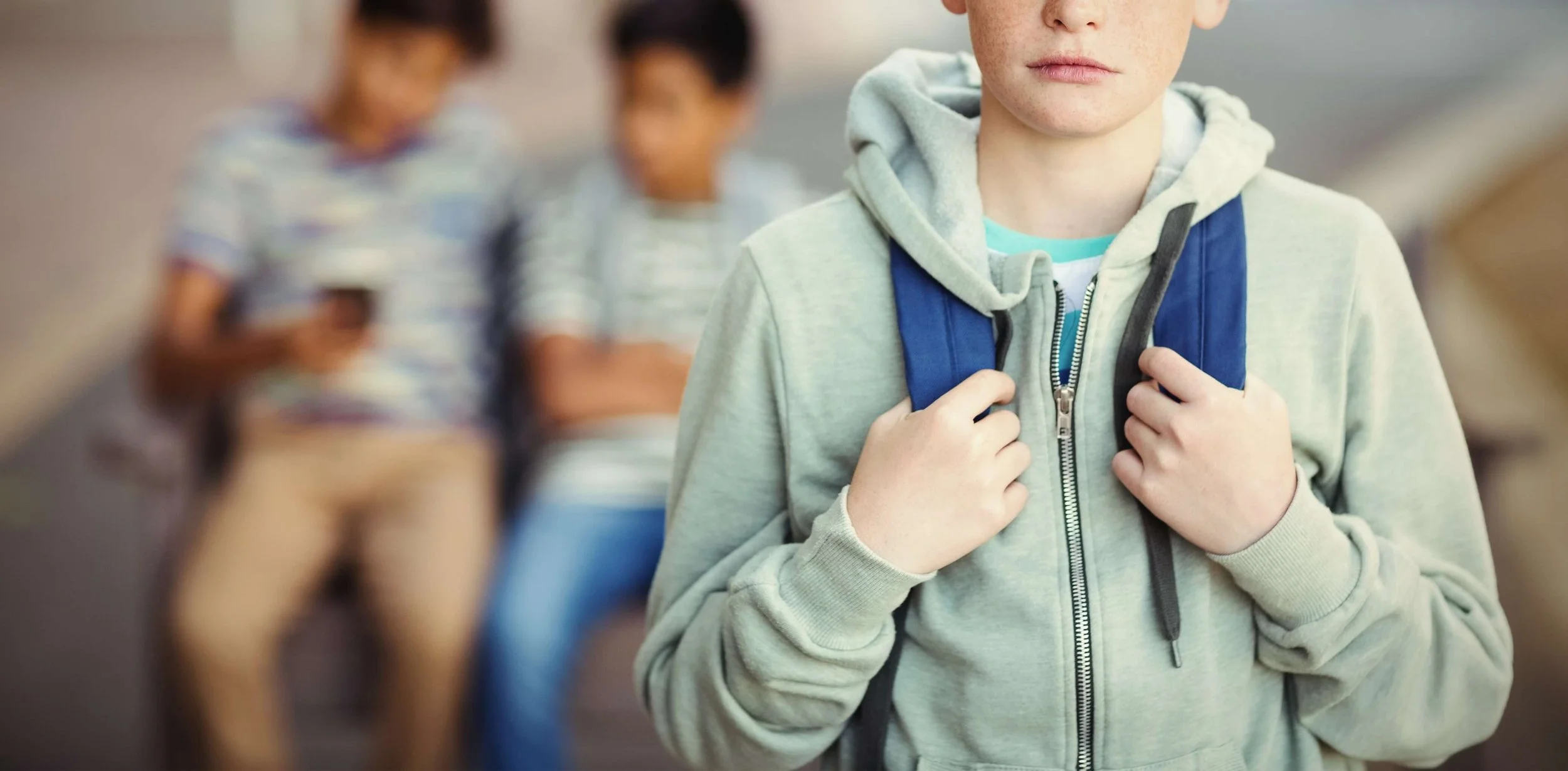
For many families, mornings can feel like a battle: tears, complaints of stomachaches, and pleas to stay home from school. While it may be tempting to view these behaviors as simple defiance, they can actually signal school avoidance or refusal, which occurs when a child experiences intense emotional distress about attending school. This issue has become increasingly common in recent years, influenced by factors such as post-pandemic anxiety, academic pressures, and social stressors (McDonald et al., 2024; Ratnamohan et al., 2025; Shah, 2023b; Ulaş & Seçer, 2024). Early recognition and compassionate intervention help children re-engage academically and emotionally. Understanding the signs of school avoidance—and what makes some children more vulnerable—helps parents intervene early and effectively.
What is School Avoidance & School Refusal?
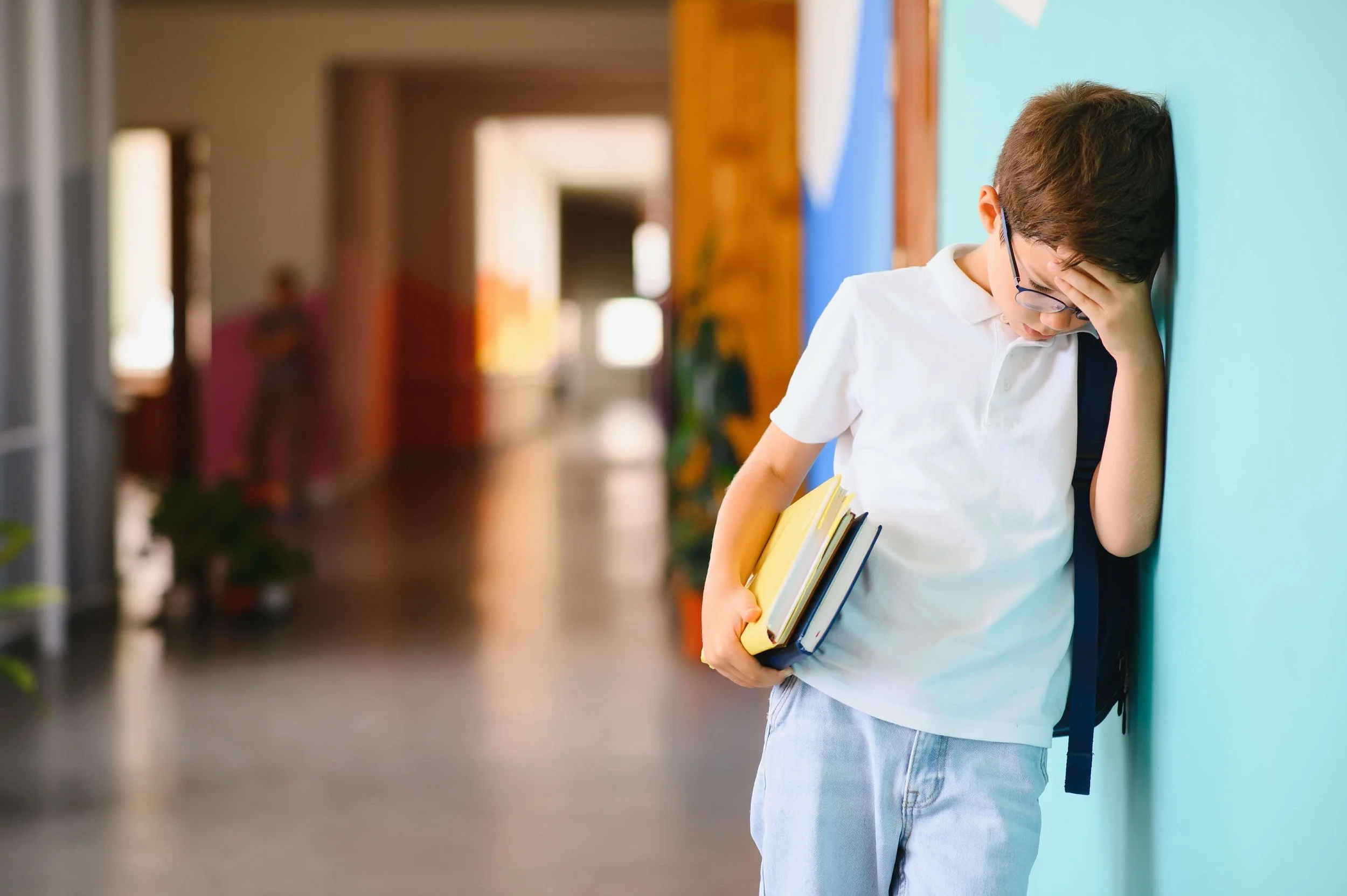
School avoidance encompasses difficulties attending school that range from situational absences driven by specific triggers (e.g., test anxiety, social anxiety) to more persistent patterns of school-related anxiety. In contrast, school refusal is distinguished by persistent, emotionally motivated resistance to attending school despite clear expectations and consistent interventions—often stemming from factors such as peer bullying (Ratnamohan et al., 2025; Ulaş & Seçer, 2024). Both involve emotional and behavioral symptoms: intense anxiety or dread that shows up as morning meltdowns, somatic complaints, partial absences, or avoidance of specific classes (Fernandes et al., 2024; Ulaş & Seçer, 2024).
School avoidance and school refusal fundamentally differ from truancy. While truancy is often associated with broader patterns of antisocial behavior—such as destruction of property, theft, or lying—school avoidance and refusal arise primarily from anxiety or situational factors and occur without significant antisocial conduct (Williamson et al., 2023).
Common Causes of School Avoidance & Refusal
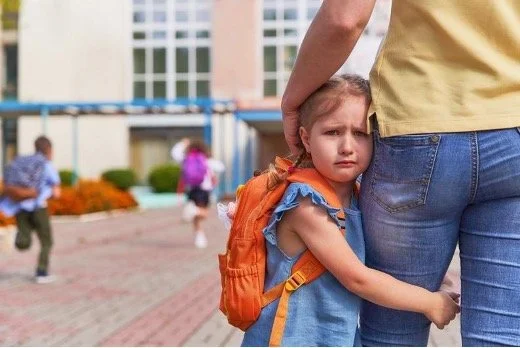
School avoidance and refusal rarely have a single cause; instead, they often reflect a combination of emotional, social, and academic stressors that feel overwhelming to a child or adolescent. Anxiety disorders are common drivers—separation anxiety triggers fear of being away from home, social anxiety brings dread of peer interactions, and generalized anxiety makes classroom demands feel unmanageable (Fernandes et al., 2024; Williamson et al., 2023). Depression can also play a significant role, often manifesting as low motivation, feelings of hopelessness, and difficulty maintaining daily routines (Williamson et al., 2023). In other cases, bullying or peer conflict creates a very real fear of returning to school environments that feel unsafe (Joo et al., 2023; Ulaş & Seçer, 2024). Some children may also struggle due to learning differences or undiagnosed ADHD, challenges which can make academics confusing, exhausting, or trigger feelings of shame (McClemont et al., 2020). Additionally, perfectionism and high academic pressure can heighten the fear of failure and of disappointing others, especially among high-achieving students (Fernandes et al., 2024). Finally, family stressors—such as parental separation, illness and depression, or trauma—can destabilize a child’s emotional resilience, making school feel even harder to face (Ulaş & Seçer, 2024). School avoidance rates are elevated in elementary and middle school, rise further in high school, and are disproportionately higher among students with disabilities (Williamson et al., 2023). Understanding these root causes is crucial for providing empathetic and targeted support.
Signs of School Avoidance at Home
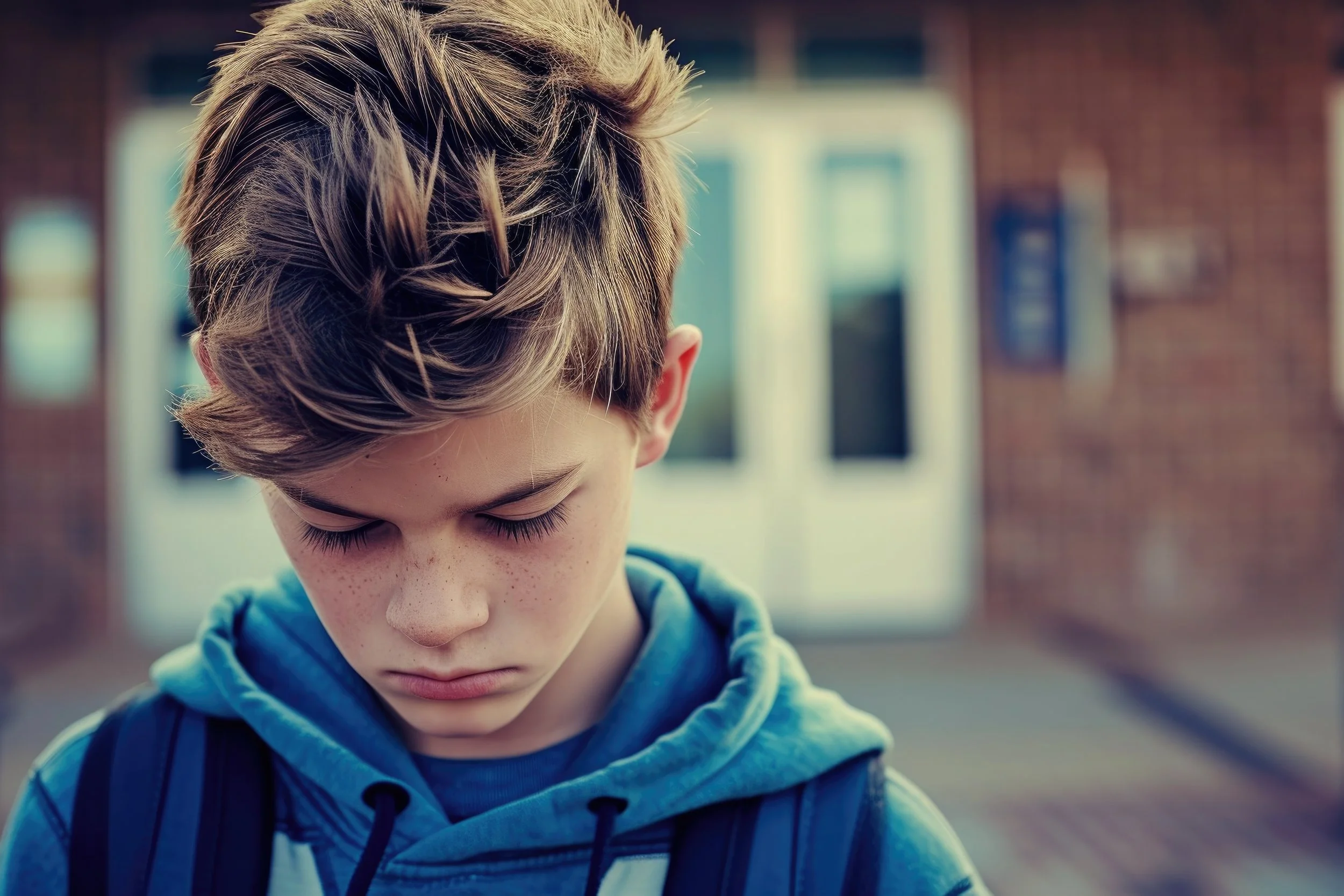
School avoidance often becomes most visible during the morning routine, when a child’s stress spikes. Many children report physical symptoms such as headaches, stomachaches, nausea, or fatigue - symptoms that often diminish once the possibility of staying home is introduced (Williamson et al., 2023). Emotionally, parents may see signs of panic, irritability, tearfulness, or complete shutdown as the school day approaches (Ulaş & Seçer, 2024). Behaviorally, some children refuse to get dressed, hide in their room, cling to parents or caregivers, or try to negotiate staying home “just for today.” Others may attend school but avoid specific classes, arrive late, or ask to be picked up early (Fernandes et al., 2024; Williamson et al., 2023). When these patterns repeat over days or weeks, they signal underlying distress, not defiance—and are worth addressing early.

How to Help a Child Who Refuses to Go to School
When a child refuses to go to school, parents often feel overwhelmed, frustrated, or unsure of what to do next. The most helpful first step is to respond with calm empathy, validating the child’s feelings, rather than dismissing them (McDonald et al., 2024). Simple statements like “I can see school feels really hard today” can reduce panic and open the door to problem-solving. Because school avoidance typically peaks in the morning, misreading a child’s distress as defiance can quickly spark conflict. To avoid a power struggle and reduce conflict, work collaboratively with your child to identify what part of the school day feels unmanageable, and break the morning routine into smaller, more manageable steps, such as focusing on just getting dressed, making it to the car, or attending one class period (Thambirajah et al., 2008). Children often absorb and reflect their parents’ emotional states, so it is essential for parents to remain calm, steady, and reassuring rather than becoming anxious themselves (Chockalingam et al., 2023).
Maintaining predictable routines around sleep, mornings, and homework helps create structure, which in turn reduces anxiety. Parents can also use gentle, gradual exposure when needed, beginning with short periods at school and gradually increasing attendance as the child gains confidence. It is equally important to partner with teachers, school counselors and school psychologists, who can provide accommodations, safe spaces, or check-in systems to support a child throughout the day (McDonald et al., 2024; Ratnamohan et al., 2025; Shah, 2023a; Shah, 2023b; Thambirajah et al., 2008).
If school avoidance persists or a child continues to shows signs of significant anxiety or depression, seeking a professional evaluation from a therapist or pediatric provider can be an essential step. Early intervention not only helps a child return to school, but also prevents long-term academic and emotional consequences (Ratnamohan et al., 2025). With patience, collaboration, and consistent support, children can regain confidence and re-engage with school in a healthier, more sustainable way.
How to Help a Child Who Refuses to Go to School
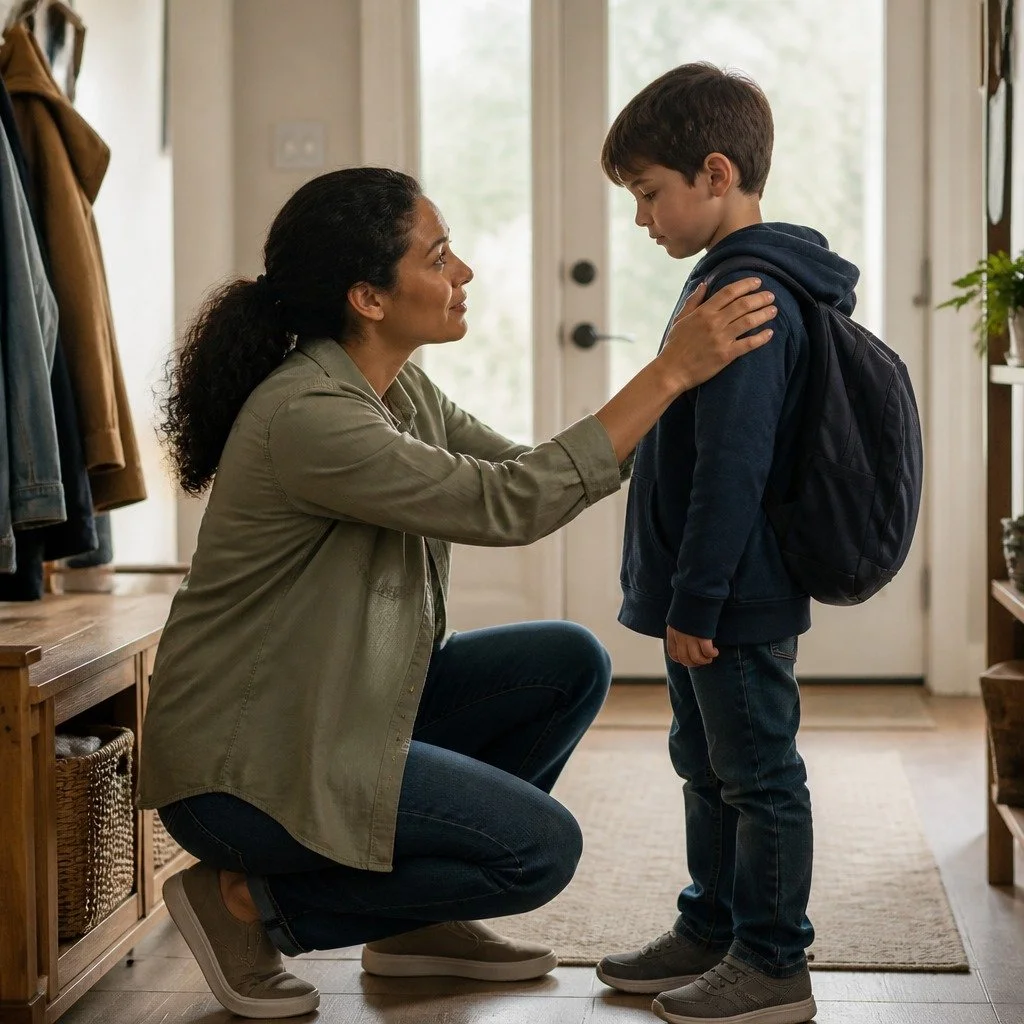
When a child refuses to go to school, parents often feel overwhelmed, frustrated, or unsure of what to do next. The most helpful first step is to respond with calm empathy, validating the child’s feelings, rather than dismissing them (McDonald et al., 2024). Simple statements like “I can see school feels really hard today” can reduce panic and open the door to problem-solving. Because school avoidance typically peaks in the morning, misreading a child’s distress as defiance can quickly spark conflict. To avoid a power struggle and reduce conflict, work collaboratively with your child to identify what part of the school day feels unmanageable, and break the morning routine into smaller, more manageable steps, such as focusing on just getting dressed, making it to the car, or attending one class period (Thambirajah et al., 2008). Children often absorb and reflect their parents’ emotional states, so it is essential for parents to remain calm, steady, and reassuring rather than becoming anxious themselves (Chockalingam et al., 2023).
Maintaining predictable routines around sleep, mornings, and homework helps create structure, which in turn reduces anxiety. Parents can also use gentle, gradual exposure when needed, beginning with short periods at school and gradually increasing attendance as the child gains confidence. It is equally important to partner with teachers, school counselors and school psychologists, who can provide accommodations, safe spaces, or check-in systems to support a child throughout the day (McDonald et al., 2024; Ratnamohan et al., 2025; Shah, 2023a; Shah, 2023b; Thambirajah et al., 2008).
If school avoidance persists or a child continues to shows signs of significant anxiety or depression, seeking a professional evaluation from a therapist or pediatric provider can be an essential step. Early intervention not only helps a child return to school, but also prevents long-term academic and emotional consequences (Ratnamohan et al., 2025). With patience, collaboration, and consistent support, children can regain confidence and re-engage with school in a healthier, more sustainable way.
When to Seek Professional Support
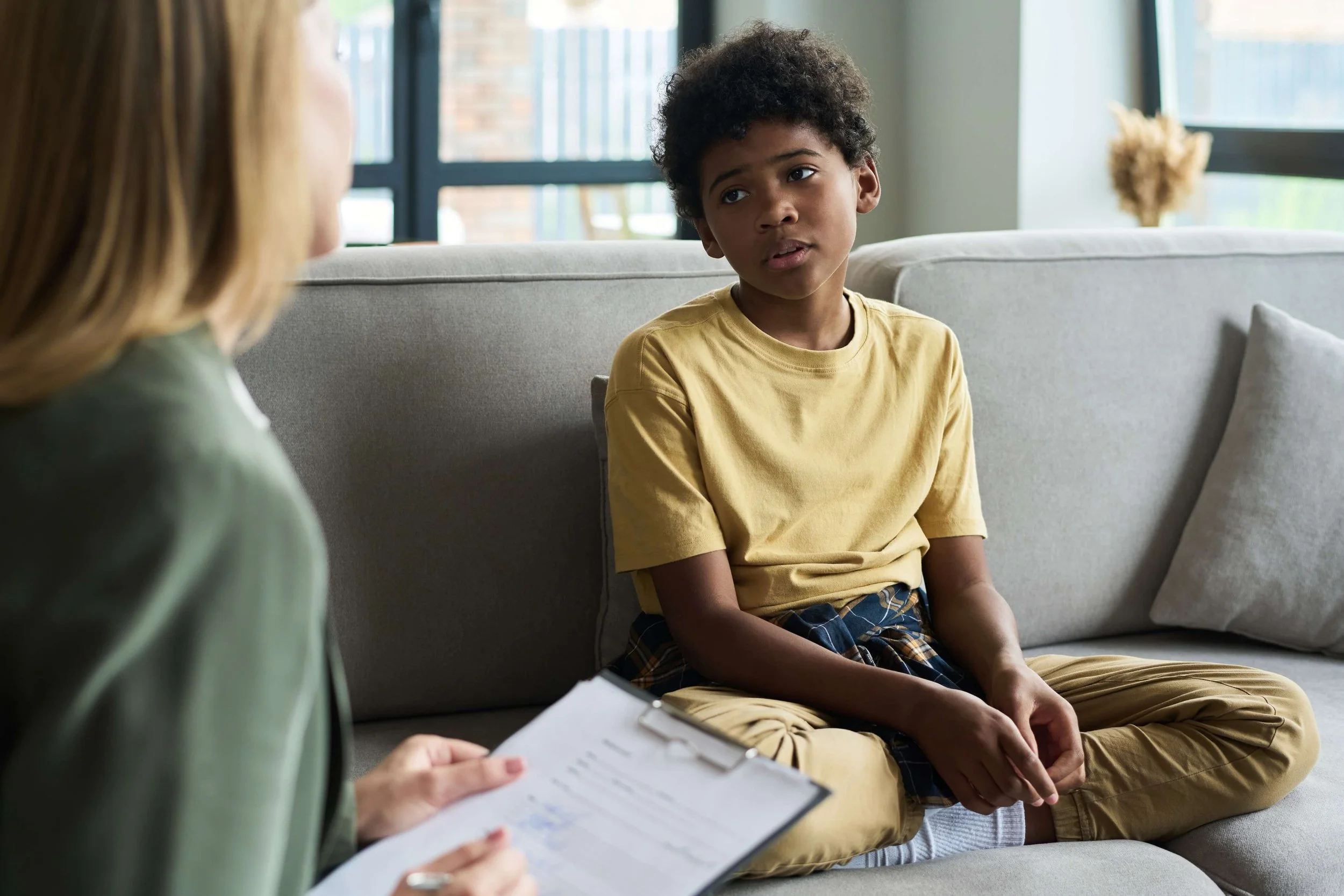
While some school-related anxiety can be managed at home, increasing frequency or severity of symptoms signals the need for professional support, which can uncover underlying causes and shape a structured plan for school re-entry (Chockalingam et al., 2023; Ratnamohan et al., 2025). Early intervention reduces distress and helps prevent long-term academic and emotional setbacks.
If school avoidance lasts more than a few days, becomes a recurring pattern, or intensifies over time, your child may benefit from structured support before symptoms become more entrenched. Other red flags include refusing to leave the house, staying in bed for long periods, or showing signs of regression such as separation anxiety or sleep disturbances (McDonald et al., 2024).
School avoidance is not a sign of defiance or lack of motivation—it’s a signal that a child is struggling and needs support. With patience, structure, and a compassionate approach, parents and caregivers can assist children in rebuilding confidence, reconnecting with peers, and re-engaging with school in meaningful ways. By recognizing early signs, collaborating with school professionals, and seeking support when needed, families can create a path toward stability, resilience, and renewed academic success.
References
Chockalingam, M., Skinner, K., Melvin, G., & Yap, M. B. H. (2023). Modifiable parent factors associated with child and adolescent school refusal: A systematic review. Child Psychiatry and Human Development, 54(5), 1459–1475. https://doi.org/10.1007/s10578-022-01358-z
Fernandes, C. F., Kannoth, S., Pendergrass Boomer, T. M., Hieftje, K. D., & Fiellin, L. E. (2024). Systematic review of interventions with some school involvement for school refusal in high school-age adolescents. Children & Schools, 46(2), 85–95. https://doi.org/10.1093/cs/cdae003
Joo, H., Kim, S. R., & Gilfillan, B. H. (2023). Exploring the relationships among bias-based bullying, fear, and school avoidance in a national sample of U.S. adolescents: The role of school counselors. Professional School Counseling, 27(1). https://doi.org/10.1177/2156759X231212889
McClemont, A. J., Morton, H. E., Gillis, J. M., & Romanczyk, R. G. (2020). Brief report: Predictors of school refusal due to bullying in children with autism spectrum disorder and attention-deficit/hyperactivity disorder. Journal of Autism and Developmental Disorders, 51(5), 1781–1788. https://doi.org/10.1007/s10803-020-04640-y
McDonald, B., Michelson, D., & Lester, K. J. (2024). Intervention for school anxiety and absenteeism in children (ISAAC): Co-designing a brief parent-focused intervention for emotionally-based school avoidance. Clinical Child Psychology and Psychiatry, 29(3), 850–866. https://doi.org/10.1177/13591045231222648
Ratnamohan, L., McInnis, P., Kotze, B., Koncz, R., Cunich, M., & Heyne, D. (2025). Roll call: Why the child and adolescent mental health sector must be present for severe school refusal. Australian & New Zealand Journal of Psychiatry, 59(6), 493–499. https://doi.org/10.1177/00048674251332727
Shah, K. (2023a). Beyond Ferris Bueller: An updated narrative. Journal of the American Academy of Child and Adolescent Psychiatry, 62(10), S25. https://doi.org/10.1016/j.jaac.2023.07.207
Shah, K. (2023b). Helping students transition back to school: Addressing school avoidance and absenteeism through collaboration. Journal of the American Academy of Child and Adolescent Psychiatry, 62(10), S24–S25. https://doi.org/10.1016/j.jaac.2023.07.207
Thambirajah, M. S., Grandison, K. J., & De-Hayes, L. (2008). Understanding school refusal: A handbook for professionals in education, health and social care. Jessica Kingsley Publishers.
Ulaş, S., & Seçer, İ. (2024). A systematic review of school refusal. Current Psychology: A Journal for Diverse Perspectives on Diverse Psychological Issues, 43(21), 19407–19422. https://doi.org/10.1007/s12144-024-05742-x
Williamson, M. L. C., Roberman, S., Sopchak, K., & Mosley, T. M. (2023). School avoidance: How to help when a child refuses to go. The Journal of Family Practice, 72(7), 304–307. https://doi.org/10.12788/jfp.0653