Alternatives to Spanking: Building Connection, Not Compliance

First and foremost, let me begin by acknowledging that many people grew up in homes where spanking was used as an intervention to curb unwanted behavior. If you grew up in one of these homes, have spanked your own children, or are trying to identify the best way to implement discipline in your home, my hope is that this article creates a safe place where we can unpack the complexity of physical discipline and explore how it may impact your relationship with your child. My intent is never to shame any parent. Truth be told, most parents who use spanking as a means of discipline are merely replicating the discipline they experienced themselves as a child. In most cases, such discipline is implemented with the best intentions—parents may believe this form of discipline is necessary or it may be something they turn to in moments of desperation when nothing else seems to work. You love your children and you want to guide them as they grow and develop—and sometimes this guidance necessitates the experience of consequences for their behavior.
The question of whether to spank your child is something the field of psychology has studied for decades. The research has consistently shown that spanking is an ineffective form of discipline, and it may cause harm to your relationship that you never intended. So, the deeper questions are why doesn’t spanking help and how else might you discipline effectively?
Spanking is defined as hitting a child with an open hand on the buttocks or extremities with the intention of modifying their behavior without causing physical injury. Many people distinguish between spanking and physical abuse, drawing a line at leaving marks, using objects, or hitting other body parts (e.g., across the face). However, from a developmental and neurophysiological perspective, the distinction between spanking and physical abuse is far less clear than most people think—the same mechanisms in the brain get activated, the same stress responses are triggered, and many of the same negative outcomes occur. The primary difference is one of degree and frequency rather than kind.
The Core Contradiction
The fundamental issue lies within the contradictory message spanking sends to children. It can be difficult to step back in time and remember what it felt like to be a small child in a very big world—but it’s important we try. It’s important we keep in mind that children have limited language and limited coping strategies to manage frustration and big emotions, and, at times, to understand the relationship between cause and effect.
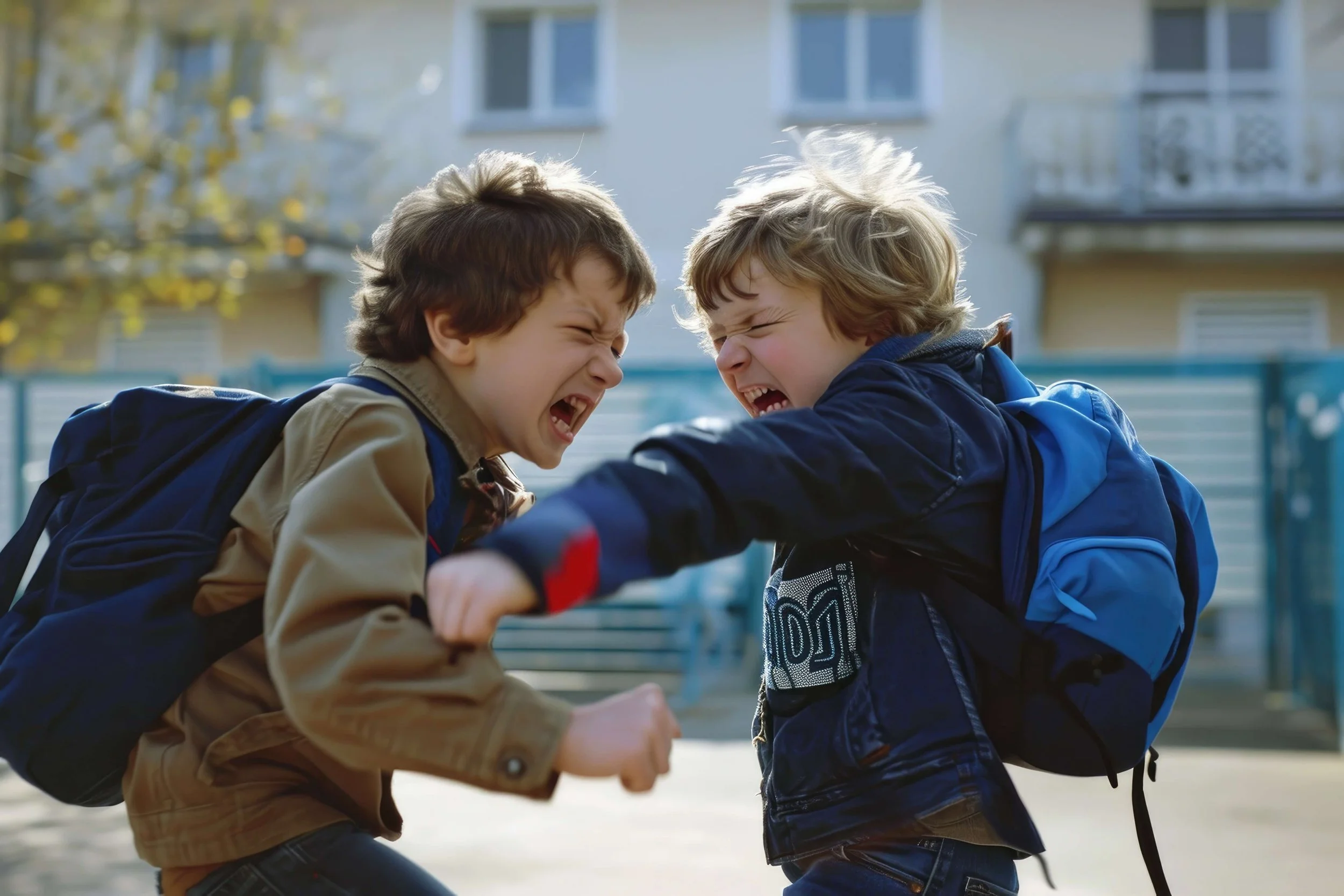
Take a minute to think about some of the common scenarios that result in spanking. A child may hit their sibling. We tell that child that hitting is unacceptable. We may say, “We don’t hit!”—but then we lay our hands on that child in an effort to reinforce that their behavior won’t be tolerated. A child may display aggression toward another child at daycare. Your response to their physical aggression becomes the place to meet your child and respond in kind. The expectation that a child controls their own behavior when, in turn, that child experiences us as modeling a lack of control ourselves, is confusing for a child. The message we send to our children is “do as I say, not as I do.”
From an adult's perspective, you may think the distinction is obvious: I'm the parent, this is discipline. I'm teaching my child an important lesson, and this is fundamentally different from a child lashing out in anger. But children, especially those who are young, don't think in such abstract terms. They don't parse the nuanced difference between "justified hitting" (my parent is spanking me) and "unjustified hitting" (me hitting my sibling). What they experience is: a person who is upset with another person's behavior uses physical force to express that frustration and control the other person's behavior. Spanking simply fails as a strategy for discipline. When you spank a child, you're creating a profound cognitive and moral dissonance that undermines the very lesson you're trying to teach.

The Developmental Reality: Children Are Concrete Thinkers
Any form of discipline must take into account the age and stage limitations of a child. When we understand how children's brains work, especially children under the age of five, it becomes clear as to why spanking fails to be effective. Children are concrete, literal thinkers. They don't yet have the cognitive capacity for the kind of abstract moral reasoning that would allow them to understand: "Physical aggression is wrong when I do it, but acceptable when mom does it because she has authority and is teaching me." That level of nuanced thinking requires a fully developed prefrontal cortex, which children simply do not have.
In his theory of cognitive development, Piaget (1952) described this stage as preoperational thinking, wherein children learn through observation and imitation. During this stage of development, children are highly egocentric, making it difficult for them to understand the perspective of others outside themselves. When you spank your child, they learn that hitting is how we negotiate frustration and conflict. The fact that you call it discipline or a spanking instead of hitting is of no consequence.

The Double Standard Children Can Feel But Cannot Articulate
Children have an incredibly strong sense of fairness, even if they can't always articulate what they perceive to be an injustice. Spanking violates that sense of fairness in a profound way. As a parent, you are asking your children to respect a moral standard you, yourself, don’t abide by. The message of, do as I say, not as I do, is one of the most confusing messages you can send to a young developing brain.
If adults managed conflict between each other in this manner, we would be outraged. We would likely respond with, “Who does this person think they are, putting their hands on me?" But we do this to children—the most vulnerable, powerless people in our society—and we call it "discipline." Children feel the same injustice we feel, even if they don’t yet have the language to articulate it. As a result, they internalize one of two messages:
1. “I must deserve to be hit because I’m bad.” This suggests an inherent character defect, leading to poor self-esteem and a deep sense of shame.
2. The rule for aggression is dictated by the person with the most power. In other words, the bigger, stronger, more powerful person is permitted to use physical force on the smaller, weaker, less powerful person.
Neither of these reflect the message a loving parent wants to communicate to their child. While some may argue they are different than most and can spank their child while completely calm and emotionally regulated, you are still modeling for your child that physical force is an appropriate response to behavior you want to change. If someone isn’t doing something you approve of, it’s acceptable to use your body to force them comply. Your emotional state at the time doesn’t change the fundamental physical action or its message.
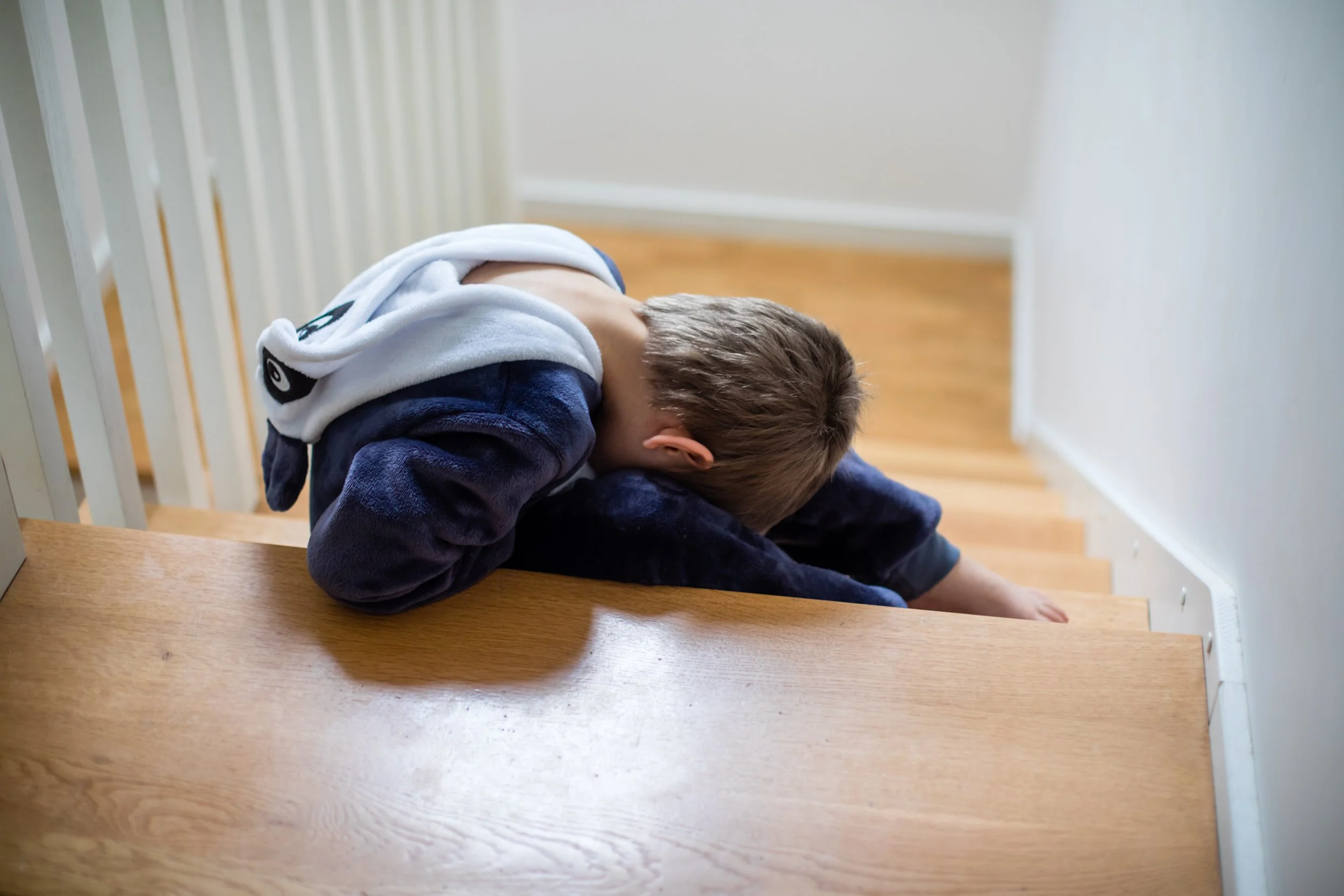
The confusion that spanking creates shapes how children understand morality, justice, relationships, and themselves. Children who are spanked often struggle with moral reasoning because they never learned actual ethics—they learned fear-based compliance. They don't ask "Is this right or wrong?" Instead, they ask themselves, "will I get caught?” or “will I be punished?"
This aligns with Piaget’s (1932/1965) theory of moral development, which describes young children as operating from a stage of heteronomous morality—viewing rules as fixed and imposed by those in power rather than as principles reasoned through mutual respect. Spanking reinforces this fear-based orientation to morality rather than supporting a child’s growth toward the autonomous, cooperative moral reasoning Piaget describes in later stages of development.
Fast forward: your teenage daughter has her first boyfriend—a young man who is bigger and much stronger than she is. They get into an argument, he gets frustrated, and he hits her. Instead of ending the relationship, she minimizes the event telling herself, “this is how people who love each other handle conflict.”
This is one contributing factor to intergenerational trauma. When you use physical discipline you’re not just teaching your child how to behave right now; you're developing a blueprint for all their future relationships, including their relationships with their own children one day. And the blueprint you're teaching with spanking is: love and violence can coexist, power justifies physical aggression, and when words fail, use your body to establish dominance.

Spanking & the Increased Risk for Inmate Partner Violence
When we consider how the behavior and choices parents make contributes to how children grow up and experience the world, it’s important to consider the potential long-term consequences of physical discipline. Longitudinal research has shown that young adults who were spanked as a child are significantly more likely to experience dating violence—both as a survivor and a perpetrator. This pattern is shown to persist across cultural contexts and is independent of whether the child considered the spanking as "mild" or more severe (Temple et al., 2018). At the end of the day, when a parent puts their hands on a child they communicate a critical relational message to that child—a message of safe connection or one of required compliance.
Clinically, this means that preventing intimate partner violence starts with psychoeducation about how discipline is practiced in families. When working with families affected by high-conflict divorce or intimate partner violence, it's essential to explore multigenerational patterns of physical discipline and help parents see how their own practices may increase their children's risk—both as future perpetrators and survivors. By helping parents shift from power-based discipline to relationship-based approaches, we can interrupt intergenerational trauma disguised as an ordinary parenting decision.

A Child-Centered Approach to Discipline
With any form of discipline, it’s important to consider both short-term and long-term interventions. Any time we communicate with children we want to be intentional with our words and our actions. When we think about discipline as teaching rather than punishing, the focus of intervention shifts to equipping your child with the skills they need to manage their behavior, understand consequences, regulate their emotions, and make better choices in the future. A child-centered approach recognizes that effective discipline begins with understanding your child's developmental stage, temperament, and underlying needs. This means considering what your child is capable of at their age and what might be driving their behavior, rather than applying a one-size-fits-all response. The larger goal is to help your child develop a strong internal compass that will guide them throughout their life. Here are a few of my favorite alternatives:
Caught ya’ being good: Instead of focusing on unwanted behavior, this intervention reinforces positive behavior a child organically engages in. It’s easy for parents to fall into the trap of focusing on negative behavior. Often, children inadvertently pair negative behavior with parental attention. By consciously redirecting your attention and praising specific positive behaviors throughout the day, you reinforce that the best way they can capture your attention in a way that feels good is to increase positive prosocial behavior. For this intervention to be most effective, you want to avoid generic praise (e.g., good job) and focus on the details that caught your attention and are deserving of praise (e.g., I noticed you put your toys away without being asked—that was really responsible, You did a great job using your words when you were upset—that took a lot of self-control.). When you are intentional with your words, your child learns they are seen, valued, and that connection is available through positive behavior.
Natural consequences: Understanding the relationship between cause and effect is an important developmental milestone for all children. Natural consequences are what happens naturally when a child makes a choice—if they refuse to wear a coat, they feel cold; if they don't eat dinner, they may feel hungry before their next meal; if they break a toy by playing too roughly, the toy is broken and they can't play with it anymore. The greatest challenge for parents is to take a step back, not intervene, and allow the natural consequence to occur. As an adult with the ability to see the larger picture and anticipate the natural consequence, it can be hard to stand by and consciously choose not to rescue your child in that moment—but the power of the intervention lies in your ability to allow your child to see the experience through.

Logical consequences: I often tell parents that discipline just for the sake of applying a consequence is not effective. Logical consequences address concerns regarding unwanted behavior, but also teach children that they can make amends, repair relationships, and learn from their mistake. Logical consequences communicate to children that, while you may have made a poor choice, you also have the capacity to move forward and make better choices in the future. For example, your child may draw on the wall, in which case you may have them help you clean the wall. If they are reckless with a sibling’s toy and it breaks, you may have them contribute a portion of their allowance to replacing the broken toy. The key to effective intervention is respect—you show respect to your child, you elicit respectful response from them, and we show respect toward others. Logical consequences should be tied to the behavior, should be reasonable in scope, and explained in advance whenever possible. When you do this, you empower your children to make informed choices. They know what to expect in advance, so any consequence is a direct result of their choice. If the consequence is something they don’t want to experience, they are now intrinsically motivated to make a different choice that may lead to a more favorable outcome in the future.
Time-in rather than time-out: Time-out is a longstanding and common approach parents implement. The problem with this approach is that the intervention itself promotes misattunement between a parent and their child. Time-out isolates children when what they need more than anything is connection and co-regulation. Isolating your child communicates that when they experience distress, their access to you is severed and they are responsible for managing their big feelings all alone. While you may see subtle improvements in your child’s behavior over time, it is likely a function of compliance and not connection.
Time-in takes the opposite approach. When your child is melting down or acting out, you stay close. Get down on their level, drop the tone of your voice, slow down your words, and support them in self-regulating. You support them by helping give language to their experience (e.g., You're having really big feelings right now. I'm going to sit with you until your body feels calm.). It’s important to clarify that time-in does not mean boundaries are pushed to the side. You still set appropriate limits (e.g., hitting or destructive behavior), but you join them to support them in self-regulation (e.g., Let’s take some deep breaths together). Time-in teaches children that emotions are manageable and that relationships can withstand difficult moments, whereas time-out reinforces shame and isolation. intrinsically motivated to make a different choice that may lead to a more favorable outcome in the future.
Strengthening the Parent-Child Bond
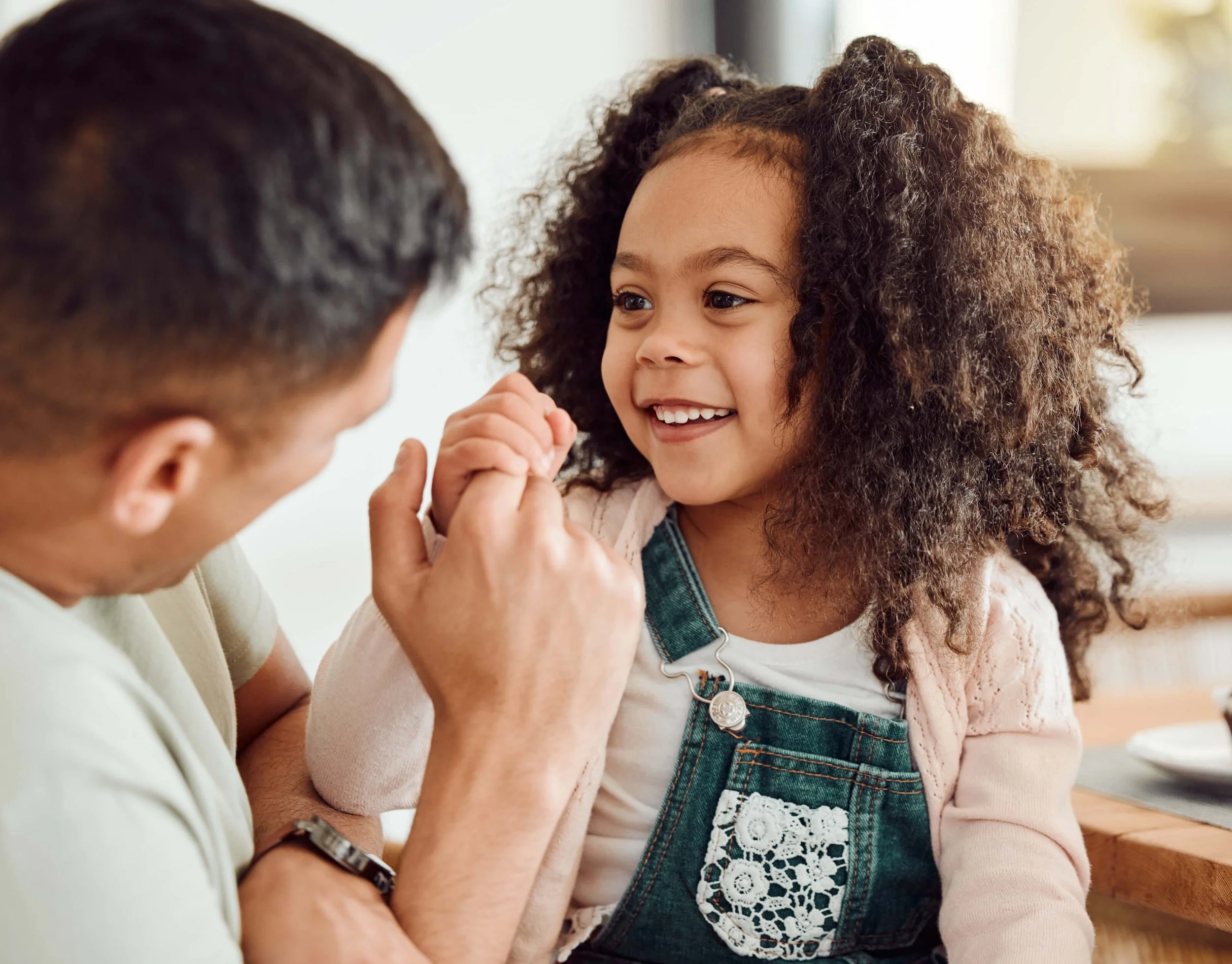
When we treat children as partners in finding solutions, rather than adversaries to be controlled, we model healthy communication and problem-solving. We also create a space where children can feel seen and heard. For example, “I’ve noticed that bedtime has been hard. What do you think is making it hard for you to calm your body and prepare for bed?). It is often in these moments that children may reveal valuable information. They may reveal they're scared of the dark, worried about missing out, or experience a spike in anxiety anticipating a separation from you. Without that information, you may interpret their behavior as a simple defiance. But when you brainstorm solutions together ("What could we do to make bedtime easier for both of us?). Children are remarkably creative and are much more likely to follow through on solutions they helped create. This approach teaches problem-solving skills, values their input, and reduces power struggles because it's collaborative rather than authoritarian.
Children need clarity and consistency. Simply put, children need adults whose words and actions align. They need to learn that problems are solved with patience, creativity, communication, and mutual respect—not with physical force. They need to learn that when someone is bigger and stronger, they use that power to protect and guide, not to dominate and hurt.
When you choose not to spank and instead approach discipline through teaching instead of through pain, you send a clear, coherent message: "In this family, we don't hurt each other, ever. Not even when we're frustrated. Not even when someone misbehaves. We use our words, we solve problems together, and we repair when we make mistakes. Your body is always safe with me." This is the message you want your children to internalize—one that promotes internal moral development instead of external fear-based compliance. This is the message that dismantles intergenerational trauma. This is the message that aligns with who you really want to be as a parent and who you want your child to become.
When you implement effective discipline that fosters connection, you have the power to communicate a clear message without compromising the safe bond you share with your child—a message that is clear, coherent, constructive, and always rooting in love. Your children are always watching, learning, and developing. At the end of the day, the most important question to ask yourself is, what message do I want to communicate to my child?

How Therapy Can Support the Parent-Child Relationship
Therapy can be invaluable in helping parents develop more effective, attuned discipline strategies. Our therapeutic work is designed to help parents become more intentional about discipline by helping them recognize their emotional triggers, understand their child's developmental capacities, and practice responding rather than reacting. This work supports you in exploring intergenerational patterns of discipline—breaking patterns that may no longer serve you or your family and build a stronger relationship with an approach that aligns with your values.
References
Piaget, J. (1952). The origins of intelligence in children (M. Cook, Trans.). International Universities Press. (Original work published 1936)
Piaget, J. (1965). The moral judgment of the child (M. Gabain, Trans.). Free Press. (Original work published 1932)
Temple, J. R., Shorey, R. C., Fite, P., Stuart, G. L., & Le, V. D. (2018). Childhood corporal punishment and future perpetration of physical dating violence. The Journal of Pediatrics, 194, 233–237. https://doi.org/10.1016/j.jpeds.2017.10.052