Our Roots Remain: The Collective Trauma of the Los Angeles Wildfires
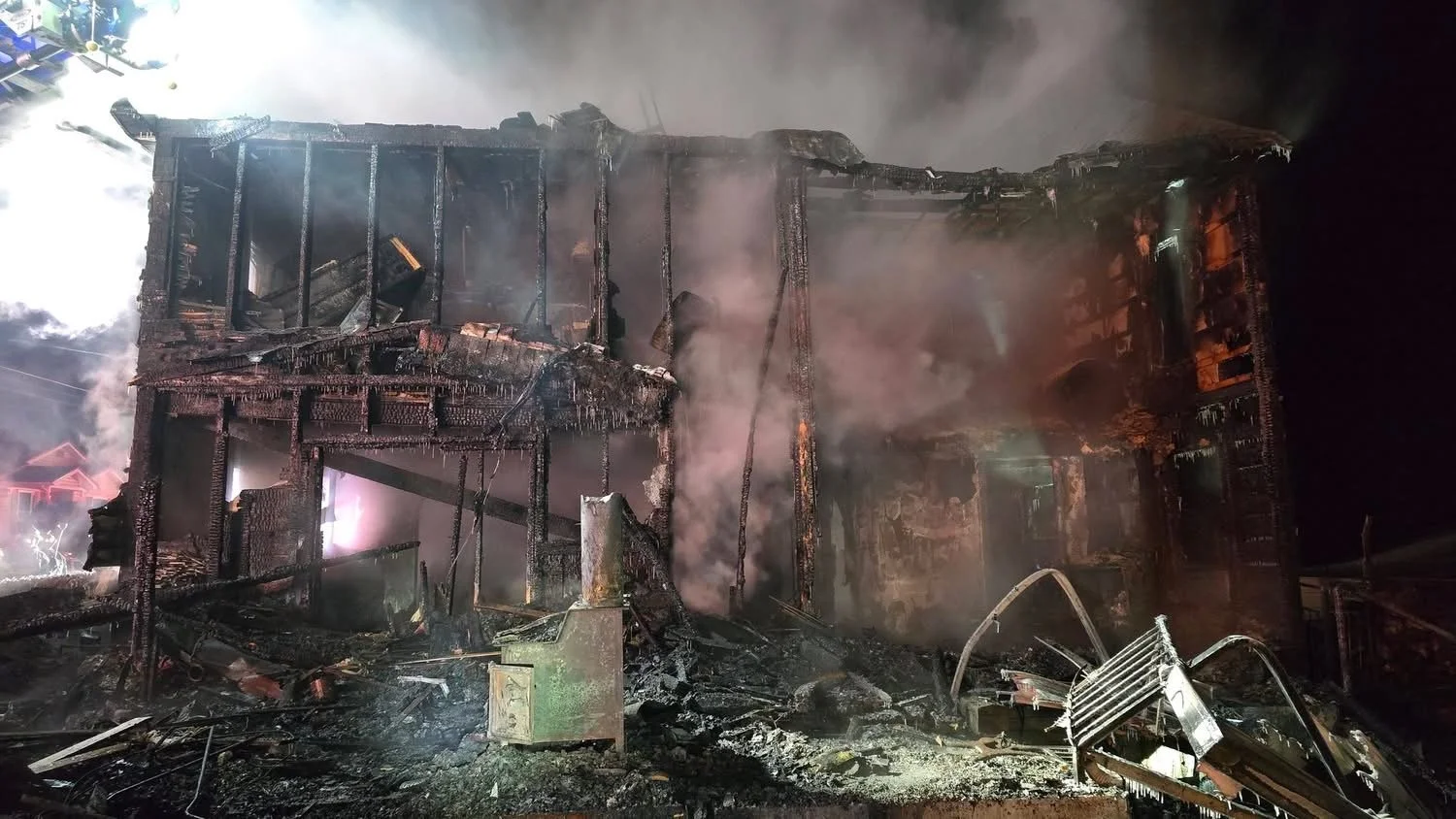
Photo Credit: Karen Lynne Photography
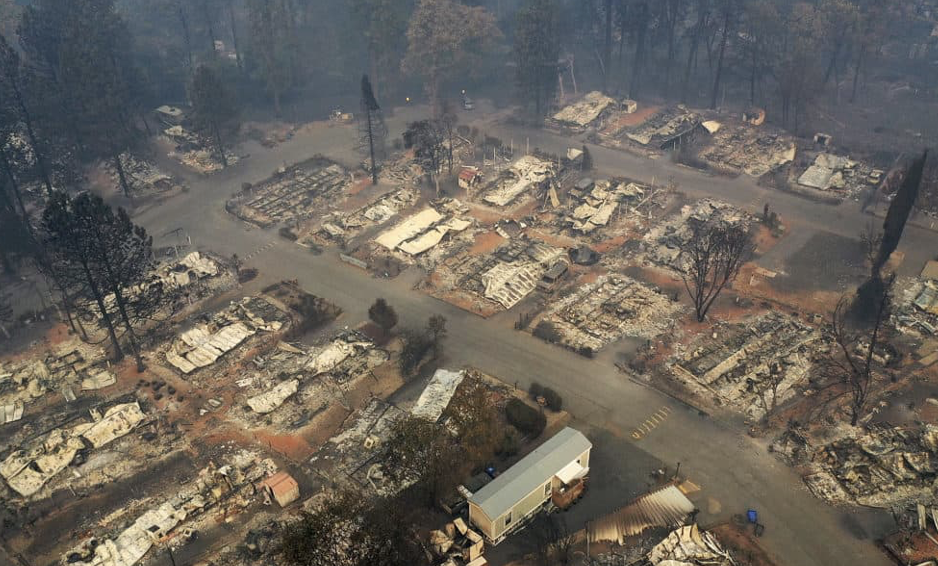
In January 2025, two catastrophic wildfires reshaped the landscape and lives of greater Los Angeles. The Eaton Canyon Fire tore through the foothill community of Altadena and surrounding neighborhoods. As this fire burned out of control, the Palisades Fire simultaneously swept through the Palisades, Malibu, and surrounding coastal communities. Together, these fires destroyed thousands of homes, displaced tens of thousands of residents, and claimed the lives of 31 people (Los Angeles County Department of Medical Examiner, 2025). Many of those losses were concentrated in areas where life-saving warnings arrived too late — a painful reality that has only deepened both the community's grief and sense of injustice many continue to carry (Castleman et al., 2025). While the flames were contained within weeks, the emotional aftermath has proven far more enduring. The trail of profound grief continues to reverberate well into the present (Phillips, 2025). For many survivors, healing is not simply a matter of rebuilding structures — it requires rebuilding an internal sense of safety, identity, and belonging (To et al., 2021).
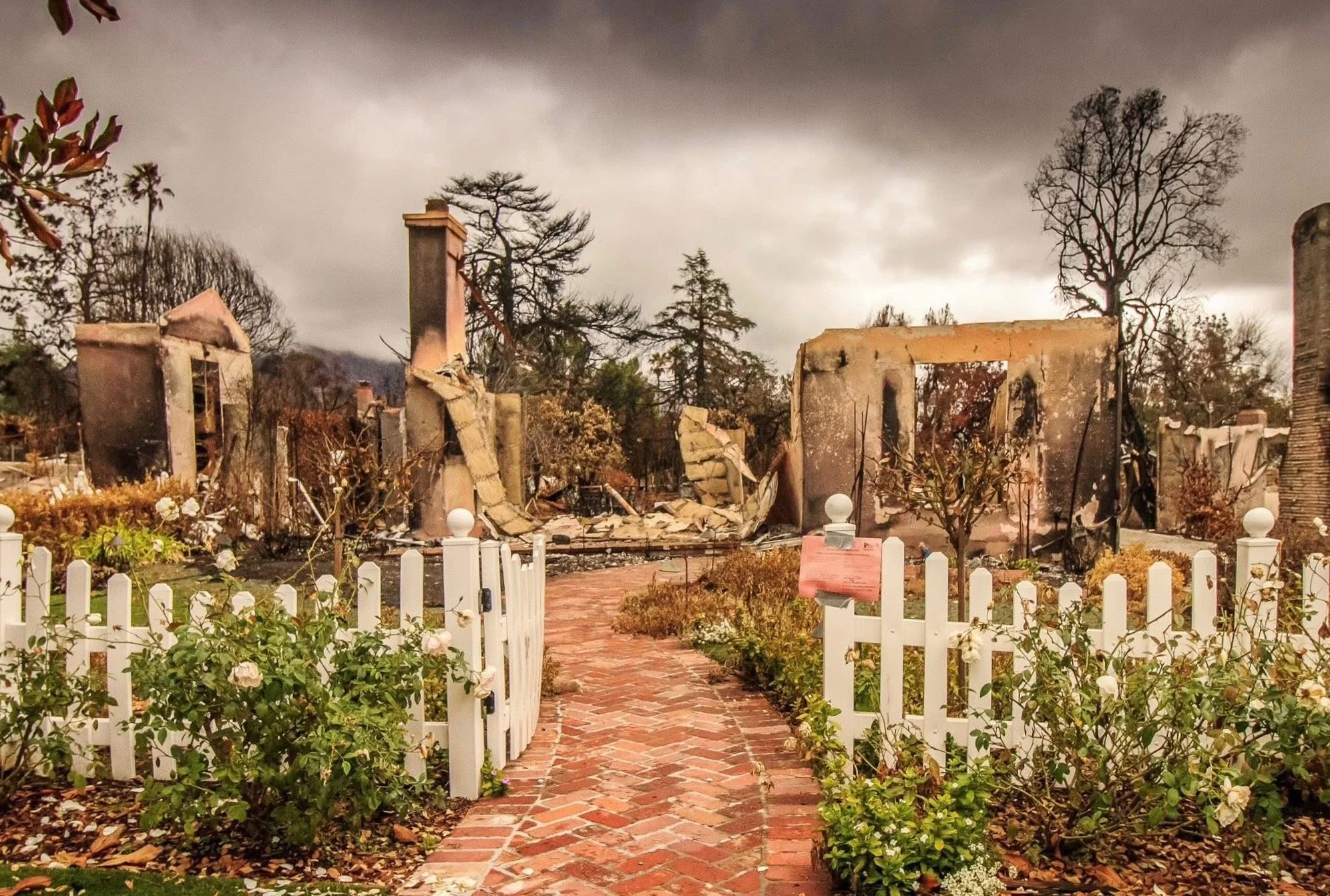
Photo Credit: Karen Lynne Photography
When the Smoke Clears, Trauma Begins to Surface
Trauma following a natural disaster like the Eaton Canyon or Palisades Fires rarely surfaces all at once. In the immediate aftermath, survival demands take precedence — securing shelter, meeting basic needs, navigating insurance claims, and adjusting to disrupted routines. It is often only after these urgent demands are stabilized that the full weight of the emotional impact begins to emerge. Many survivors report symptoms consistent with post-traumatic stress disorder (PTSD), including sleep disturbances, hypervigilance, intrusive memories, emotional numbness, and night terrors (Barna, 2025; Rosellini et al., 2018). Research on wildfire-affected populations confirms that PTSD symptoms can persist for months or years following a disaster (Smith, 2025), and that the psychological effects of wildfires often outlast the physical recovery timeline by a significant margin.
Beyond the more observable symptoms of trauma, many survivors carry grief that is quieter and less visible. This may involve mourning specific losses — a childhood home filled with irreplaceable mementos, a neighborhood that may never fully return — or mourning more intangible losses, such as a sense of security, community cohesion, and a familiar way of life (Rosellini et al., 2018; Adu et al., 2023). Whether a family lost everything in the Pacific Palisades or watched their Altadena block burn from a distance, the psychological effects of wildfire trauma persist long after the flames are extinguished (Barna, 2025).
The Emotional Landscape of Wildfire Survivors
Survivors of the 2025 Los Angeles wildfires often find themselves navigating a complex and shifting emotional terrain. Anxiety and uncertainty about financial stability, housing security, and the future are among the most reported experiences in the wake of large-scale disaster (Barna, 2025; To et al., 2021). For parents and caregivers, concern for their children’s emotional wellbeing adds another layer of stress that can feel relentless (Ray, 2025).
Children experience wildfire trauma differently than adults, and often more acutely. Beyond the loss of a home, many children lost the infrastructure that made their world feel safe and predictable — their school, their classroom, their teacher, the friend who sat next to them. Schools across Altadena and the Palisades were destroyed or forced to relocate, scattering classmates across new campuses, new schedules, and in many cases, new cities entirely. For a child, the loss of a best friend's daily presence — even when the friendship itself survives — can feel like its own quiet grief, one rarely named alongside the larger losses adults are processing. Children thrive on routine and predictability, and disaster disrupts both simultaneously: the physical space of school, and the social fabric of friendship that depended on proximity (Stribley et al., 2024).
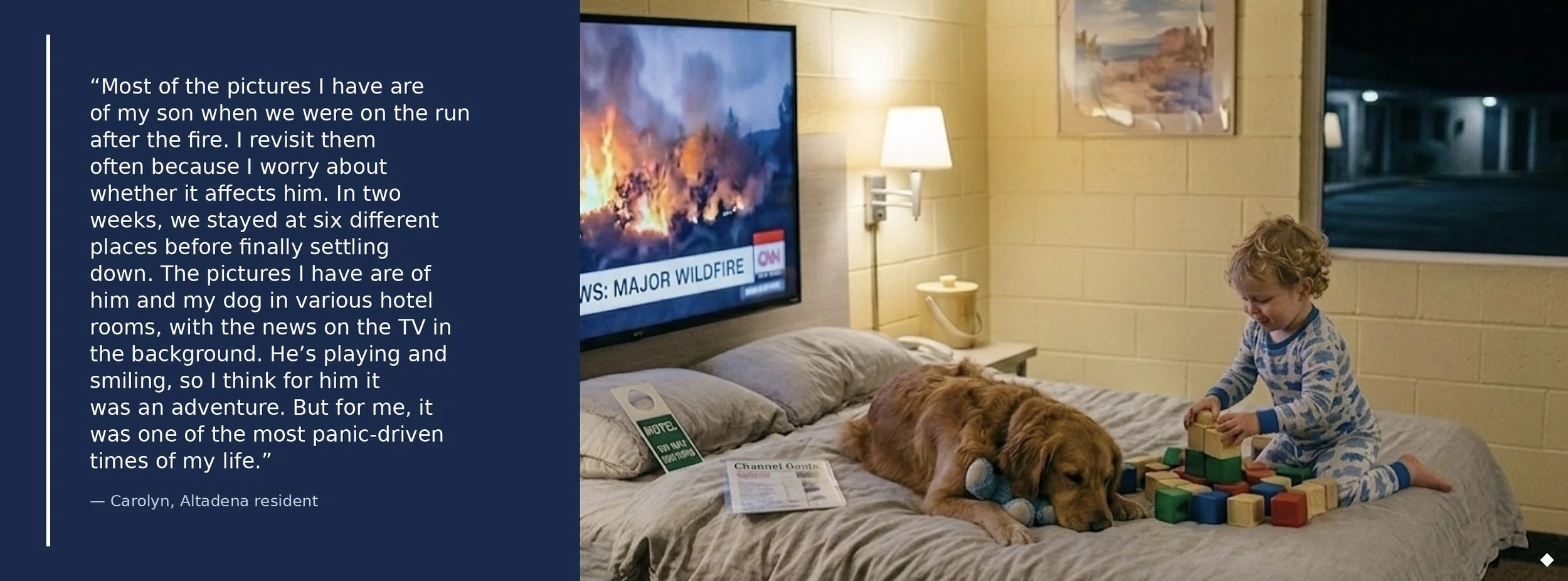
This gap between a child's experience and a parent's is something many caregivers describe with quiet unease. "Most of the pictures I have are of my son when we were on the run after the fire,'“ says Carolyn, an Altadena resident. “I revisit them often because I worry about whether it affects him. In two weeks, we stayed at six different places before finally settling down. The pictures I have are of him and my dog in various hotel rooms, with the news on the TV in the background. He's playing and smiling, so I think for him it was an adventure. But for me, it was one of the most panic-driven times of my life."
This disorientation often shows up not as articulated sadness, but as behavioral change — disrupted sleep, separation anxiety, irritability, or regression to earlier developmental behaviors (Ray, 2025). Research following wildfire-affected children has found that moderate to severe PTSD symptoms affect 9–12% of children at six months post-fire, rising to as much as 27–37% at the one-year mark — a trajectory that runs counter to the more linear recovery often seen in adults (Smith, 2025).
Many individuals report a grief that is palpable — not only for material items they may have lost, but for the disruption of the routines, identities, and community structures that once provided a feeling of being anchored in their daily lives. Even in the absence of physical displacement, the loss of a familiar landscape infused with personal and community meaning, can cause feelings of anxiety and a sense of powerlessness—the eucalyptus tree they once climbed as a child; the hiking trail a family walked every Sunday; the view from a kitchen window that no longer exists—these losses rarely find language within an insurance report—but they are real, they are grief, and they can linger for years. Research on wildfire survivors has documented a phenomenon researchers call solastalgia — a sustained distress tied to the loss of familiar surroundings — as well as disruptions to community and personal identity that can persist well into the recovery period (Eriksen & Gill, 2010; Stanley et al., 2024).
Those who escaped the Eaton Canyon or Palisades fires with their homes intact often face a particularly invisible struggle when watching neighbors and friends experience more measurable losses (Murray, 2018). They are frequently excluded from formal relief programs, assumed to be fine, and sometimes encounter social tension from those who lost more (Rosenthal et al., 2021). For some, that invisibility extends beyond emotional experience into physical reality. Homes left standing were not always homes left safe — smoke and ash contamination forced many families into a slower, more insidious kind of loss.
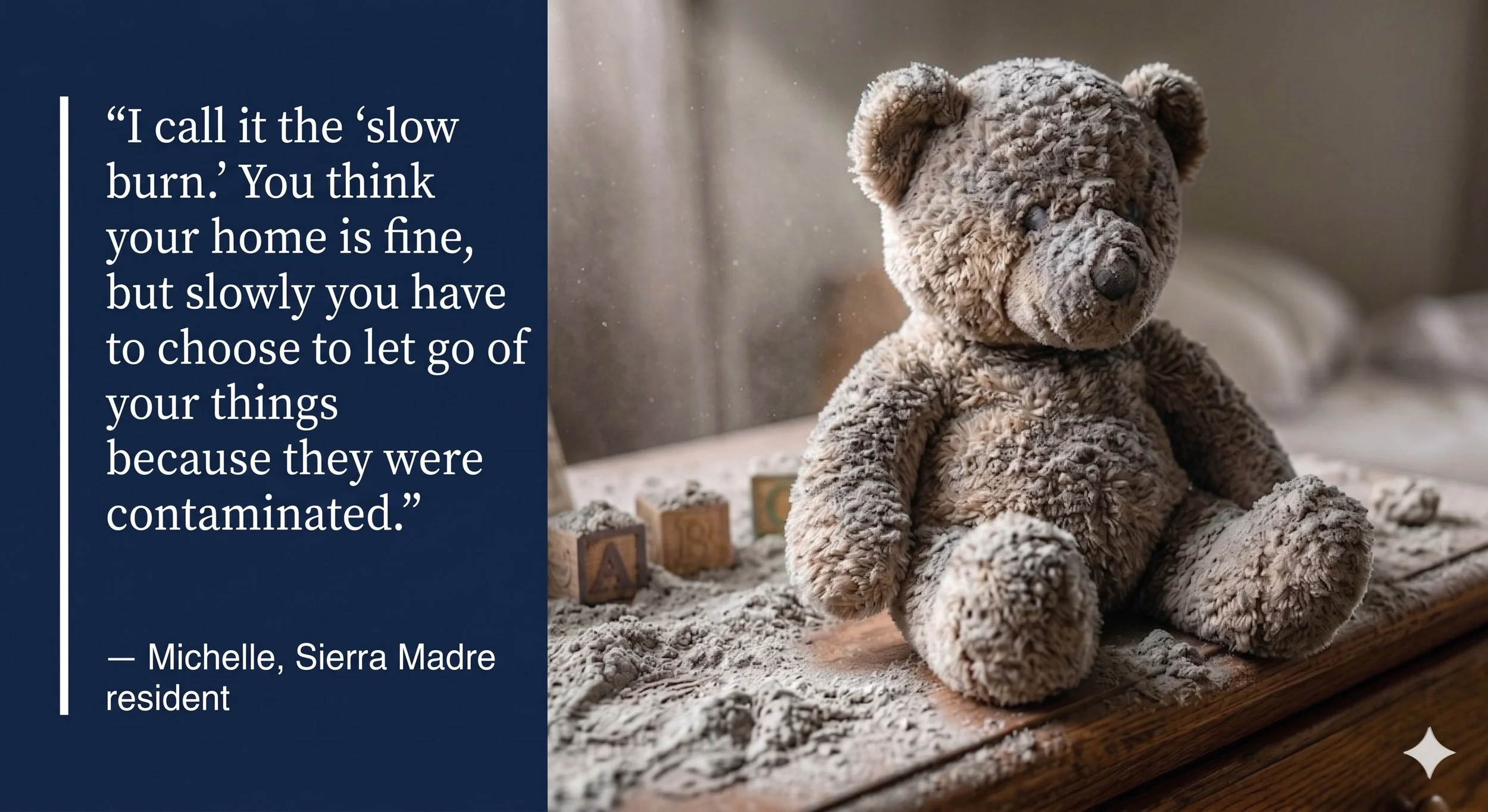
"A lot of people experienced invisible losses from contamination, even if their houses were still standing," says Michelle, a Sierra Madre resident. "I call it the ‘slow burn,’ because you think your home is fine, but slowly you have to choose to let go of your things because they were actually contaminated. We had to throw away about 70% of our belongings after the fire. It was also harder to get insurance to cover the losses because the damage was invisible — you had to advocate for testing just to prove your home and belongings weren't safe. Many people were forced to return to unsafe conditions in their homes because insurance wouldn't honor their claims." Many experience intense survivor's guilt, social isolation from displaced neighbors, and the disorienting experience of living in a neighborhood that no longer resembles the one they knew (Murray, 2018; Smith, 2025).
Chronic stress is another challenge, emerging as the emotional and practical demands of long-term recovery gradually wear down internal resources. This sustained pressure keeps the nervous system in a prolonged state of activation, making healing particularly difficult. These reactions are a natural, human response to extraordinary loss. Naming them can help reduce self-criticism and open a space for self-compassion — a necessary foundation for genuine healing.
Psychotherapy & the Path Forward
Each survivor's path forward is unique, and no single therapeutic approach fits every experience of loss. The early stage of treatment centers on stabilization — reestablishing a sense of safety, reducing acute distress, and identifying grounding strategies to manage the hyperarousal that often accompanies disaster-related trauma (Murray, 2018). This phase is not preliminary to healing; it is healing, and it lays the foundation for everything that follows.
As stability takes hold, therapy can shift toward processing the traumatic memories themselves. Evidence-based approaches such as EMDR (Eye Movement Desensitization and Reprocessing) and trauma-focused cognitive behavioral therapy (TF-CBT) are particularly well-suited to this work, helping survivors revisit distressing memories in manageable steps — not by erasing those memories, but by gradually reducing its emotional intensity (Adu et al., 2023). The goal is not to forget, but to integrate them by developing a cohesive narrative.
Over time, many survivors choose to explore deeper questions about meaning, identity, and continuity. Therapy can support the gradual reconstruction of an identity that honors what was lost while remaining open to what lies ahead. This is not a linear process, and it does not follow a predictable timeline. But with the right support, healing is possible.
For some survivors, that reconstruction takes the shape of reframing the practical work of rebuilding itself. "One thing that has helped me is reframing the physical recovery into taking back what the fire took from us," says Laura, an Altadena resident who lost her home. "Every item you re-buy, every step you complete with insurance, every board you see added to a neighbor's home is undoing one more thing that the fire did. For me, it makes the overwhelming nature of what needs to be done to fully rebuild seem less daunting and more empowering." This kind of reframe — turning an exhausting checklist into evidence of resilience — reflects the very kind of meaning-making that fosters healing and resilience.
Healing as a Collective Act
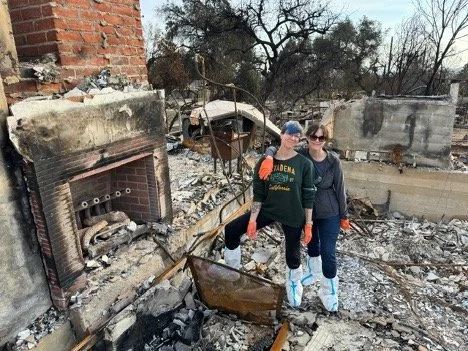
Healing from the wildfires is not a solitary journey. Individual therapy provides a vital space for processing personal loss, working through trauma, and rebuilding internal stability — but psychological recovery from a disaster of this scale rarely happens in isolation. Communities that create shared spaces for mourning, mutual aid, and collective resilience consistently recover more fully, more quickly, and more equitably than those left to rebuild individually (Barna, 2025). For neighborhoods like Altadena and the Pacific Palisades, this collective dimension of healing is not a supplement to therapy — it is a vital part of it, and the collective witnessing is already visible throughout these communities. For many survivors, recovery is not simply about restoring what was lost — it is about reclaiming it. While therapists can hold an hour of healing, the community holds the rest. Shared grief, witnessed rebuilding, and neighbors who simply show up for one another are not peripheral to recovery from wildfire trauma — they are central to it.
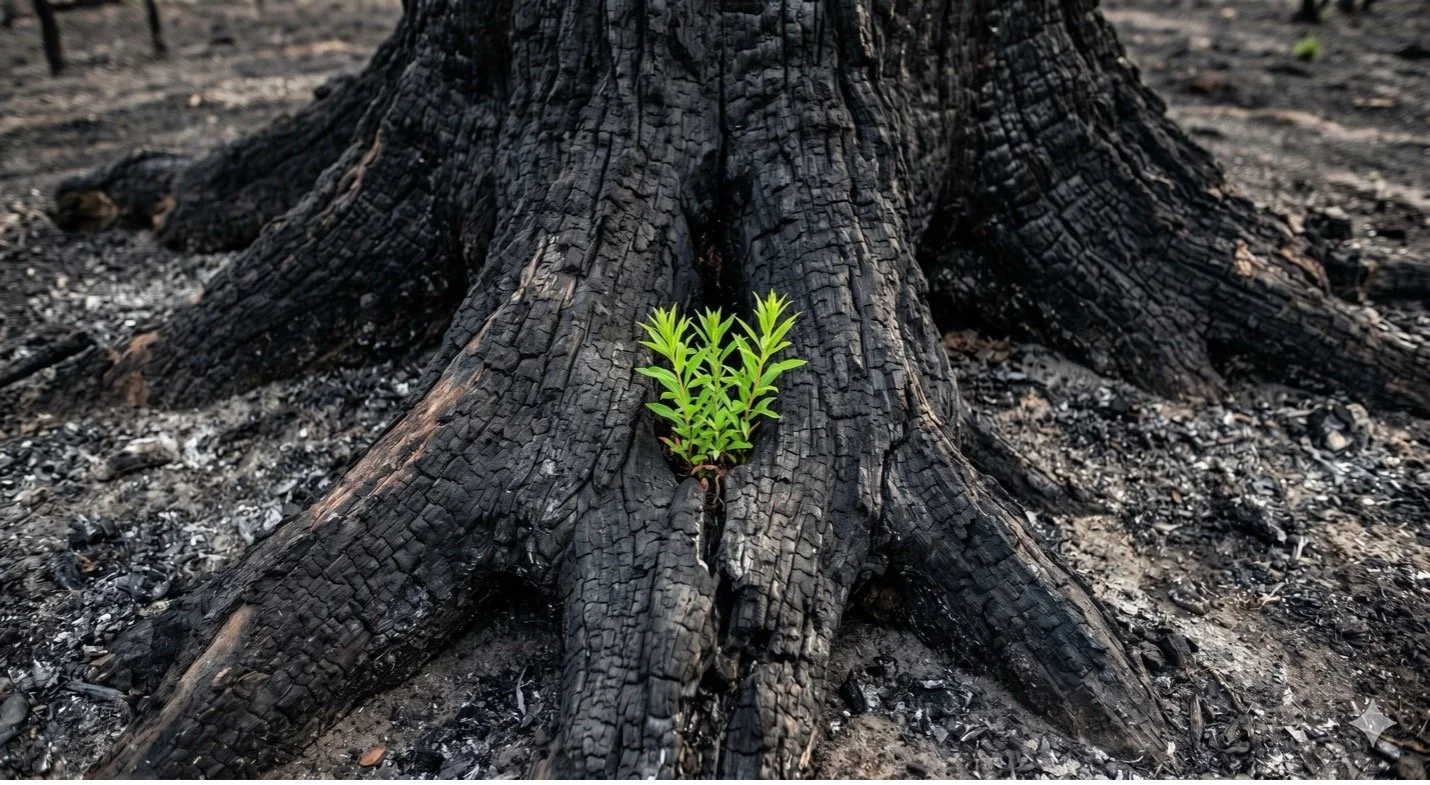
The Eaton Canyon and Palisades fires left visible scars on the landscape and invisible ones on the people who called it home. But what fire cannot reach are the roots — of memory, of community, of shared belonging built over decades, not seasons. As scarred as this landscape may be, those roots remain. And like everything rooted deeply enough to survive a single season of devastation, they will continue to grow.
References
Adu, M. K., Agyapong, B., & Agyapong, V. I. (2023). Children’s psychological reactions to wildfires: a review of recent literature. Current Psychiatry Reports, 25(11), 603–616.
Barna, M. (2025). Wildfire survivors suffer mental, physical health effects long after flames are extinguished. The Nation’s Health, 55(3), 1–15.
Castleman, T., Toohey, G., & Fry, H. (2025, January 16). Western Altadena got evacuation order many hours after Eaton fire exploded. 17 people died there. Los Angeles Times.
County of Los Angeles Department of Medical Examiner. (2025, July 22). Wildfires update: 31st death related to the January wildfires confirmed [Press release]. https://me.lacounty.gov/2025/press-releases/wildfires-update-31st-death-related-to-the-january-wildfires-confirmed/
Eriksen, C., & Gill, N. (2010). Bushfire and everyday life: Examining the awareness-action 'gap' in changing rural landscapes. Geoforum, 41(5), 814–825. https://doi.org/10.1016/j.geoforum.2010.05.004
Murray, H. L. (2018). Survivor guilt in a posttraumatic stress disorder clinic sample. Journal of Loss and Trauma, 23(7), 600–607.
Phillips, S. (2025, February). The Palisades and Eaton fires: Neighborhood data and potential housing market effects. UCLA Lewis Center for Regional Policy Studies. https://www.lewis.ucla.edu/research/the-palisades-and-eaton-fires-neighborhood-data-and-potential-housing-market-effects/
Ray, A. (2025). Flames and fears: The impact of wildfire on children’s mental health. Unmoored Yet Unbroken: Ecopsychology for a Changing World Stories of Human‑Nature Relationships, 41–48.
Rosellini, A. J., Dussaillant, F., Zubizarreta, J. R., Kessler, R. C., & Rose, S. (2018). Predicting posttraumatic stress disorder following a natural disaster. Journal of Psychiatric Research, 96, 15–22.
Rosenthal, A., Stover, E., & Haar, R. J. (2021). Health and social impacts of California wildfires and the deficiencies in current recovery resources: An exploratory qualitative study of systems-level issues. PLOS ONE, 16(3), e0248617. https://doi.org/10.1371/journal.pone.0248617
Smith, N. (2025, July 29). The hidden part of wildfire recovery in Altadena, and beyond. Direct Relief. https://www.directrelief.org/2025/07/the-hidden-part-of-wildfire-recovery-in-altadena-and-beyond/
Stanley, S. K., Heffernan, T., Macleod, E., Lane, J., Walker, I., Evans, O., Greenwood, L. M., Kurz, T., Calear, A. L., Reynolds, J., Cruwys, T., Christensen, B. K., Sutherland, S., & Rodney, R. M. (2024). Solastalgia following the Australian summer of bushfires: Qualitative and quantitative insights about environmental distress and recovery. Journal of Environmental Psychology, 95, Article 102273. https://doi.org/10.1016/j.jenvp.2024.102273
Stribley, L., Krishnamoorthy, G., Dallinger, V., Ma, J., Nielsen, T., Bryce, I., Rees, B., Morse, A., Rogers, M., & Burton, L. (2024). Post-disaster social connectedness in parent–child dyads: A qualitative investigation of changes in coping and social capital of rural Australian families following bushfires. The British Journal of Social Work, 55(1), 5–24. https://doi.org/10.1093/bjsw/bcae123
To, P., Eboreime, E., & Agyapong, V. I. (2021). The impact of wildfires on mental health: A scoping review. Behavioral Sciences, 11(9), 126.