The Weight of What If: Understanding the Role of Guilt in Suicide Bereavement
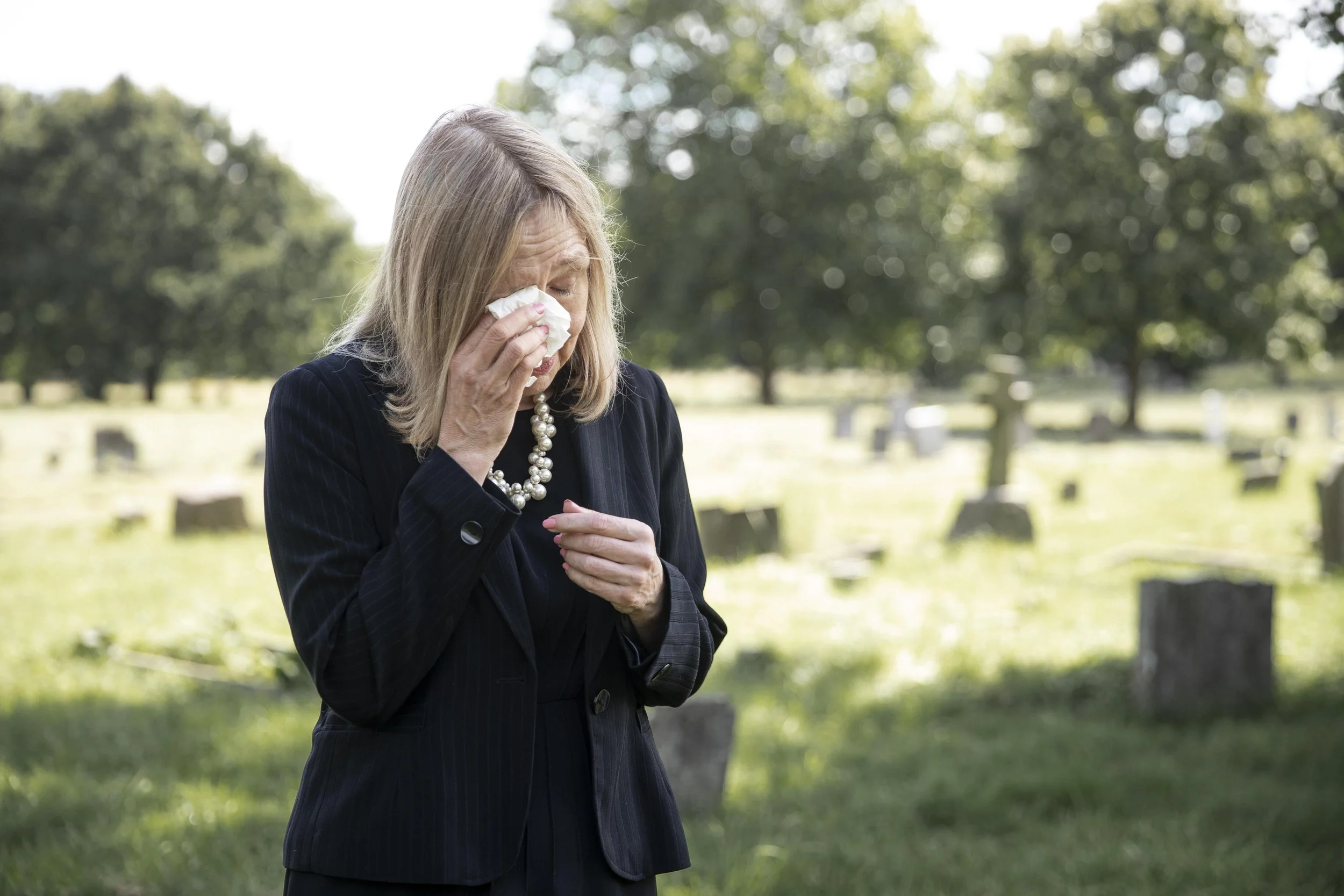
When someone dies by suicide, those left behind often carry a burden of guilt that sets this form of grief apart from nearly all other forms of loss (Cvinar, 2005). The experience of losing someone to suicide is categorically different from other forms of bereavement, and the guilt that follows is one of the primary reasons why. Many survivors report feeling haunted by the belief that they should have somehow known their loved one was suffering so deeply—that they missed critical signs or failed to intervene (Sands et al., 2020). For many suicide loss survivors, guilt becomes far more than just a symptom of grief after suicide; it becomes the lens through which they filter the entire loss and attempt to make meaning of something that feels truly unimaginable (Maple et al., 2010).
As a psychotherapist who works extensively with grief, loss, and suicide bereavement, I've sat with many individuals drowning in guilt that simultaneously feels both completely illogical and utterly irrational. Understanding the role guilt plays in suicide bereavement is essential—not to eliminate it, but to help survivors carry it differently and integrate it into a broader narrative of their loss. While friends, family, and even well-meaning clinicians often emphasize the importance of "processing the loss" and "moving on," this language suggests that the relationship with the person who died must abruptly end. Instead, I encourage clients to recognize that while their loved one has died, the relationship itself has not ended—but it has fundamentally changed form (Klass et al., 1996). When we reframe the essential task of grief as finding ways to move forward rather than moving on, we open the door for new possibilities. Survivors can explore how to bring their loved one forward into their lives in a new way—maintaining connection and honoring the relationship while simultaneously integrating the reality of the loss (Neimeyer et al., 2014).

Why Guilt Emerges So Powerfully in Suicide Loss
Guilt after suicide loss is nearly universal, affecting an estimated 80-90% of suicide loss survivors (Sveen & Walby, 2008). This prevalence isn't coincidental—it emerges from several intersecting psychological and social factors that make suicide fundamentally different from other forms of death.
One of the challenges with suicide is that it carries the illusion of preventability (Séguin et al., 1995). When someone dies from a terminal condition or a severe car accident, we may wish circumstances were different, but we also appreciate the limits of our control over such events. Suicide, however, feels like it should have been preventable if only we had said the right thing, noticed the right sign, or had been more available at a critical moment. This illusion is powerfully reinforced by our cultural narratives about suicide prevention which, while well-intentioned, inadvertently suggest that suicide is always preventable if only we're vigilant enough. However, the reality is far more complex. Suicidal crises are influenced by neurobiological factors, genetic factors, mental health conditions, an individual's trauma history, social determinants, and countless other variables that fall outside any one person's control (Turecki & Brent, 2016).
Our brains are designed to organically search for causation and meaning, and this is particularly difficult in the face of trauma (Janoff-Bulman, 1992). The human brain is fundamentally a machine that relies on pattern-recognition, constantly working to create a coherent narrative about our life experiences. Our brains kick into overdrive in response to traumatic events, because they feel incomprehensible. When someone dies by suicide, this natural cognitive process kicks into high gear as we desperately attempt to make sense of something that shatters our beliefs about the world being benevolent, events being meaningful, and a belief we know how the world should work (Park, 2010).
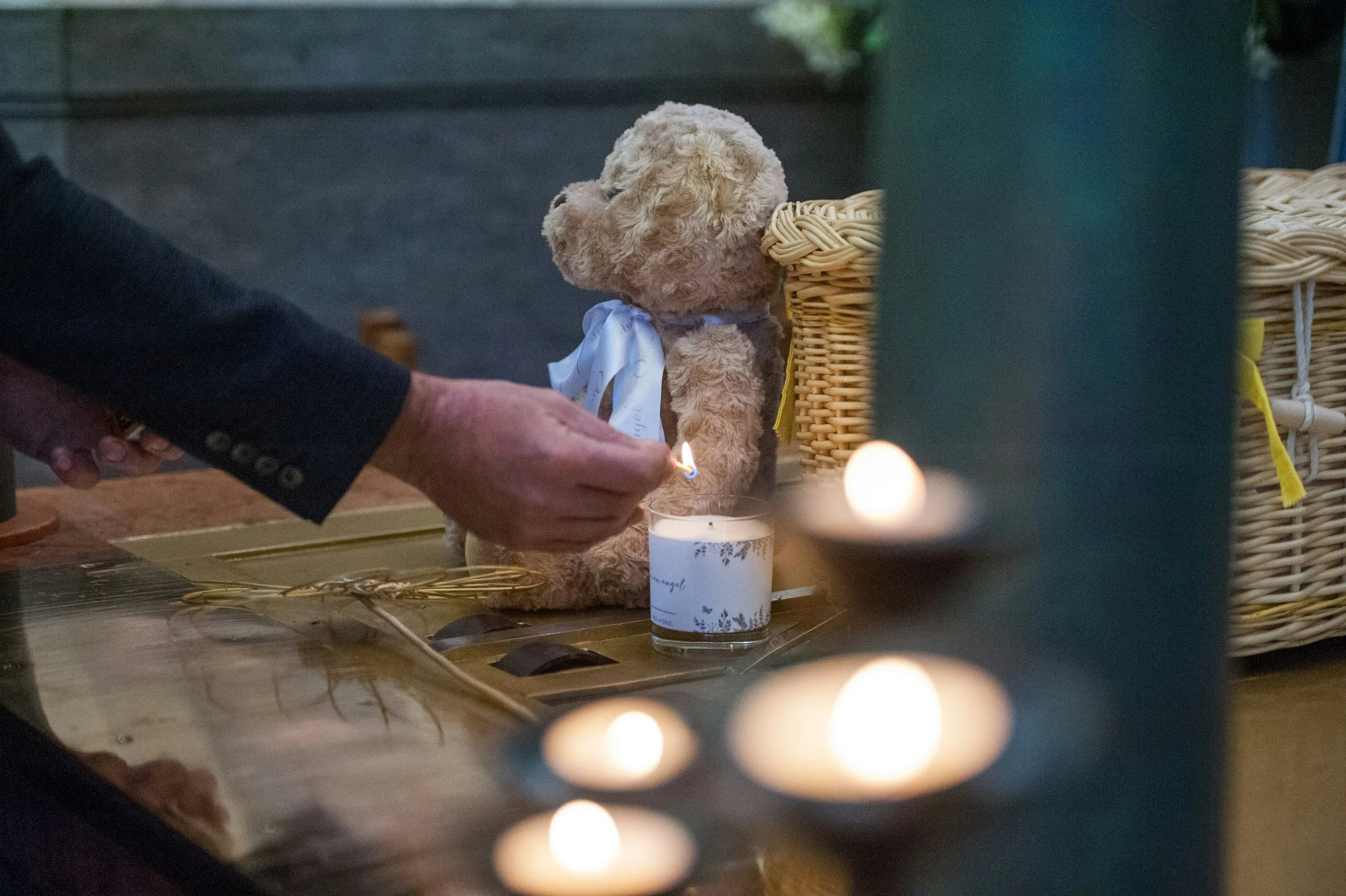
In response to feelings of profound helplessness, guilt serves an important function in that it offers us the illusion of control (Wertheimer, 2001). If we believe we are responsible for a death or should have intervened to prevent it, then the loss feels less random, less chaotic, and less senseless. While the belief that "I should have known" is deeply painful, it buffers against the existential crisis that suicide creates and is psychologically preferable to the alternative: accepting that someone we loved was suffering in ways we couldn't fully access or understand. Truthfully, suicide is the result of the intersection of a complex constellation of factors—biological, psychological, social, historical—that were ultimately beyond our control (Jordan & McIntosh, 2011). This is why survivors often fixate on specific moments or the perception of missed opportunities: "If only I had answered that phone call," "If only I had visited that weekend," "If only I had said something different during our last conversation." These thoughts foster the illusion that there was a clear intervention point, a moment where the outcome could have been changed. This narrative, while torturous, restores a sense of agency to survivors (Begley & Quayle, 2007).The alternative—accepting that we are not all-knowing — that suffering can be hidden even by those closest to us, and that despite our best efforts and deepest love, we cannot always save people from their own pain — requires us to sit with a level of powerlessness that feels unbearable. It means acknowledging that love, attention, and vigilance are not always enough. It means accepting that suicide is not a simple equation with a clear solution, but rather the tragic endpoint of suffering that may have been invisible or resistant to the very interventions we wish we had offered. From a clinical perspective, this is why simply reassuring survivors that "it wasn't your fault" or "you did everything you could" often falls flat. These statements, while well-intentioned, ask survivors to relinquish the one thing that guilt provides: a sense of order and control in a world that has revealed itself to be frighteningly unpredictable. Effective therapeutic work must acknowledge and understand the function of guilt before attempting to help survivors develop a more nuanced understanding of causation, responsibility, and the limits of human control (Litz et al., 2009).
Guilt serves another important role—it often functions as a container for other more destabilizing emotions (Jordan & McIntosh, 2011). Survivors may feel anger toward the person who died, they may experience fear over their own vulnerability to mental health conditions, or feel powerless in the face of another's suffering. Under these circumstances guilt, by comparison, may feel more manageable. It allows us to shift our felt sense of responsibility within, which paradoxically feels safer than acknowledging the limitations on our ability to influence another person's life and death.

The Intersection of Guilt and Self-blame in Suicide Bereavement
Guilt rooted in suicide loss shows up in numerous forms, all of which are significant and worth exploring (Li & Zhang, 2013):
Causal guilt is the belief that one's actions (or inactions) directly contributed to the death of their loved one. Parents often torment themselves perseverating over arguments, feelings of frustration, or decisions they made over the course of their child's life. Siblings may replay last conversations over in their mind and may question how they could have supported their sibling differently. Therapists often comb through their records, emails, and texts in an attempt to identify a precise moment they failed to intervene as they begin to systematically question their every clinical decision (Grad & Andriessen, 2020). This form of guilt often focuses on specific concrete moments that have become crystallized in their memory as the moment they failed their loved one.
Moral guilt is related to a perceived failure in character or self-worth. A grieving partner may feel they failed to be present and provide adequate support; a friend might feel they failed to prioritize the relationship and, had they not been distracted by events in their own life, the death could have been prevented; children, regardless of age, often feel they weren't worthy of their parents' love and, had they just been a better child, their parent would have felt they had a compelling reason to live. This form of guilt cuts deeper than causal guilt because it's esteem related. It attacks a survivor's fear they are fundamentally flawed themselves—and that if they weren't, this traumatic loss would not have occurred (Cvinar, 2005).
Role-based guilt operates as a function of cultural and familial expectations about who should have known, who should have helped more, and who bears responsibility for the death. Parents are particularly vulnerable to this crushing guilt because society assigns parents the ultimate responsibility for their children's wellbeing, regardless of age or circumstance (Maple et al., 2010). Therapists and other mental health providers face unique role-based guilt, as their professional identity centers on recognizing and effectively intervening in response to a clinical crisis (Grad & Andriessen, 2020).
Survivor guilt — also known as suicide survivor guilt — is the painful awareness that they have the ability to continue to live while another person does not. This can be particularly acute when a survivor has shared similar struggles—depression, anxiety, trauma, suicidal ideation, or low self-worth—but has managed to survive despite their struggle (Sands, 2009). Survivors may begin to question "why them and not me?" or "Why do I get to live when they were suffering just as much?" These questions are among the most common experiences reported by those losing someone to suicide, and they reflect a profound dissonance that is uniquely characteristic of this type of grief. If you have found yourself asking, “Why do I feel guilty after suicide loss when I know I couldn’t control what happened?” — you are not alone, and your experience has a name.
Hindsight guilt emerges from the distortion of memory through the lens of the outcome. Research on the relationship between memory and trauma suggests our brains reconstruct past events to align with what we now know (Roese & Vohs, 2012). Warning signs that may have seemed ambiguous at the time suddenly become clear in retrospect. A period of seeming improvement—which often indicates prescribed medication was warranted or therapeutic interventions have been effective—is then reinterpreted as the calm before the storm, the moment in time where their decision was cemented and they felt relief. Survivors often torture themselves because signs they now see as obvious were missed in the noise of everyday life (Sands et al., 2020).

The Complicated Relationship Between Guilt and Healing
One of the most challenging aspects of working therapeutically with guilt in suicide bereavement is that it simultaneously serves both a protective and a destructive function. Guilt supports a survivor's connection to the deceased. This pattern—often called suicide survivor guilt—is one of the most misunderstood aspects of grief after suicide, and one of the most important for clinicians and loved ones alike to recognize. For some survivors, letting go of guilt feels like they are abandoning their loved one, suggesting the death was insignificant, or that they are no longer grieving and are moving on (Neimeyer et al., 2014). Guilt also serves as a shield against the full weight of the loss. As long as they are focused on what they should have done differently, they don't have to sit with the more unbearable truth—that someone they loved was in such profound pain that death felt like their only option—and the survivor couldn't reach them.
With suicide bereavement guilt, the therapeutic work is not focused on eliminating the guilt, but instead, to help survivors hold it alongside other truths—you may wish you had done things differently, and you did the best you could with the information and resources you had at the time. Both can co-exist. Tolerance for seemingly opposing positions honors the reality of a survivor's experience while gradually expanding their narrative to include complexity, context, and ultimately self-compassion (Jordan & McIntosh, 2011).
The Cruelty of Counterfactual Thinking
Survivors of suicide loss often become trapped in counterfactual thinking—an endless loop of "what if" and "if only" (Byrne, 2016). What if I had called that night? What if I hadn't engaged in our last argument? While this is a part of normal grief, for those experiencing suicide loss, it becomes particularly corrosive because each counterfactual scenario carries the weight of potential prevention. The mind replays scenarios obsessively, editing and re-editing the past, searching for the version where everything turns out differently. Generally, this serves an adaptive purpose as it's our brain's attempt to master what feels unmastered, to gain control over what is uncontrollable (Roese & Vohs, 2012). However, this form of thinking also keeps survivors frozen in time, unable to integrate the loss into their progressing life narrative. They remain stuck in the moment of death or in the days leading up to it, desperately searching for an intervention that would have resulted in a different outcome. Losing someone to suicide leaves behind not just grief, but a relentless cognitive loop that clinical support can help interrupt and eventually integrate.

A Path Forward
Working therapeutically with guilt in suicide bereavement requires patience, nuance, and a willingness to sit with discomfort rather than rush toward resolution. The
Perhaps the most important reframe in working with guilt after suicide loss is shifting the focus of "overcoming" guilt to learning to carry it differently. For many survivors, some degree of guilt will always be a part of their grief. If you have been asking yourself, "Why do I feel guilty after suicide loss?"—know that this question, however painful, reflects the depth of your love and your mind's attempt to find meaning in the unimaginable. The metric for healing isn't determined by whether they feel guilt-free, but whether the guilt will eventually become one thread in a larger tapestry that includes love, loss, acceptance, anger, and sorrow (Jordan, 2001). Survivors often report that what changes is not whether there is a presence of guilt, but instead their relationship to it. They learn to recognize guilt when it arises, acknowledge it without being consumed by it, and return their attention to the present. They develop self-compassion that allows them to hold both their profound wish that things had been different and their recognition that they are human, imperfect, and doing their very best.

The work of grief is integration—finding a way to carry the loss forward into life without being entirely defined by it (Neimeyer, 2001). Grief after suicide, while it shares features with other forms of loss, demands a uniquely different kind of integration—one that must account for the layers of guilt, unanswerable questions, and shattered assumptions that accompany this particular kind of death. Guilt, when processed and integrated, can become part of a broader understanding of love's complexity, life's fragility, and the limitations of human power to protect those we care about from every danger, including the dangers that arise from within their own minds.
For suicide loss survivors reading this, please know your guilt is understandable and you are not alone. I have come to believe that the loss of a loved one is one of the most excruciating parts of the human condition. The pain you feel is a testament to your deep love for them. While we can never prepare ourselves for suicide loss, the death of your loved one does not define you—your love for them does.
Finding Support: Suicide Bereavement Therapy in Pasadena, CA
If the guilt after suicide loss described in this article resonates with you, working with a therapist who specializes in suicide bereavement therapy can make a meaningful difference. Suicide bereavement therapy is not about rushing you toward healing or convincing you the guilt is irrational—it is about helping you carry it differently, and finding your way back to yourself. At Anchor Psychotherapy, we offer grief therapy in Pasadena, CA and via telehealth across California, providing trauma-informed support to suicide loss survivors at every stage of their grief. Reaching out is not a sign that you are not coping—it is a sign that you understand the weight of what you are carrying, and that you deserve support in carrying it.
References
Begley, M., & Quayle, E. (2007). The lived experience of adults bereaved by suicide: A phenomenological study. Crisis, 28(1), 26-34. https://doi.org/10.1027/0227-5910.28.1.26
Byrne, R. M. J. (2016). Counterfactual thought. Annual Review of Psychology, 67, 135-157. https://doi.org/10.1146/annurev-psych-122414-033249
Cvinar, J. G. (2005). Do suicide survivors suffer social stigma: A review of the literature. Perspectives in Psychiatric Care, 41(1), 14-21. https://doi.org/10.1111/j.0031-5990.2005.00004.x
Grad, O. T., & Andriessen, K. (2020). Supporting Suicide Loss Survivors: A Guide for Funeral Directors. Hogrefe Publishing.
Janoff-Bulman, R. (1992). Shattered Assumptions: Towards a New Psychology of Trauma. Free Press.
Jordan, J. R. (2001). Is suicide bereavement different? A reassessment of the literature. Suicide and Life-Threatening Behavior, 31(1), 91-102. https://doi.org/10.1521/suli.31.1.91.21310
Jordan, J. R., & McIntosh, J. L. (Eds.). (2011). Grief After Suicide: Understanding the Consequences and Caring for the Survivors. Routledge.
Klass, D., Silverman, P. R., & Nickman, S. L. (Eds.). (1996). Continuing Bonds: New Understandings of Grief. Taylor & Francis.
Li, J., & Zhang, J. (2013). Coping with a suicidal family member: A qualitative study from the perspective of Chinese family members. Death Studies, 37(4), 343-364. https://doi.org/10.1080/07481187.2011.649941
Litz, B. T., Stein, N., Delaney, E., Lebowitz, L., Nash, W. P., Silva, C., & Maguen, S. (2009). Moral injury and moral repair in war veterans: A preliminary model and intervention strategy. Clinical Psychology Review, 29(8), 695-706. https://doi.org/10.1016/j.cpr.2009.07.003
Maple, M., Edwards, H., Plummer, D., & Minichiello, V. (2010). Silenced voices: Hearing the stories of parents bereaved through the suicide death of a young adult child. Health & Social Care in the Community, 18(3), 241-248. https://doi.org/10.1111/j.1365-2524.2009.00886.x
Neimeyer, R. A. (2001). Meaning Reconstruction and the Experience of Loss. American Psychological Association.
Neimeyer, R. A., Baldwin, S. A., & Gillies, J. (2014). Continuing bonds and reconstructing meaning: Mitigating complications in bereavement. Death Studies, 30(8), 715-738. https://doi.org/10.1080/07481180600848322
Park, C. L. (2010). Making sense of the meaning literature: An integrative review of meaning making and its effects on adjustment to stressful life events. Psychological Bulletin, 136(2), 257-301. https://doi.org/10.1037/a0018301
Roese, N. J., & Vohs, K. D. (2012). Hindsight bias. Perspectives on Psychological Science, 7(5), 411-426. https://doi.org/10.1177/1745691612454303
Sands, D. C. (2009). A tripartite model of suicide grief: Meaning-making and the relationship with the deceased. Grief Matters: The Australian Journal of Grief and Bereavement, 12(1), 10-17.
Sands, D. C., Jordan, J. R., & Neimeyer, R. A. (2020). The meanings of suicide: A narrative approach to healing. American Psychological Association.
Séguin, M., Lesage, A., & Kiely, M. C. (1995). Parental bereavement after suicide and accident: A comparative study. Suicide and Life-Threatening Behavior, 25(4), 489-498.
Sveen, C. A., & Walby, F. A. (2008). Suicide survivors' mental health and grief reactions: A systematic review of controlled studies. Suicide and Life-Threatening Behavior, 38(1), 13-29. https://doi.org/10.1521/suli.2008.38.1.13
Turecki, G., & Brent, D. A. (2016). Suicide and suicidal behaviour. The Lancet, 387(10024), 1227-1239. https://doi.org/10.1016/S0140-6736(15)00234-2
Wertheimer, A. (2001). A Special Scar: The Experiences of People Bereaved by Suicide (2nd ed.). Brunner-Routledge.